
Innovative Heat Treatment Technology Improving Wear And Galling Resistance
Expanite offers an innovative technology that prevents wear, galling, and corrosion of components in stainless steel or titanium by hardening the material in a pure-gas environment without using harsh chemicals, leaving no toxic waste and with a low carbon footprint.
Hardening of parts such as gears and other essential products made from stainless-steel alloys is a vital and necessary process to ensure those parts perform optimally.
Expanite, a company that was born from research at The Technical University of Copenhagen, has grown its innovative process of hardening stainless steel more efficiently than previous methods.
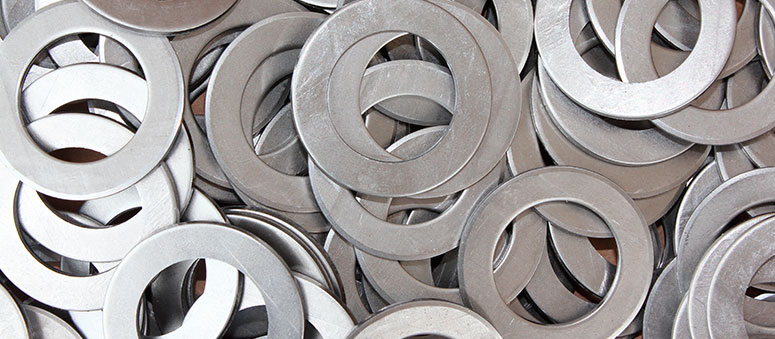
Besides the proprietary processes for stainless steel and titanium, Expanite offers specialty heat treatment solutions including hardening, tempering, solution treatment, aging, and annealing for nickel-based alloys such Monel®, Inconel® or Mu-metal, stainless steels, titanium, and other specialty materials.
“You can easily take stainless steel and put it in and harden it, but you lose corrosion properties right away if you don’t know how to do it,” said Claus Løndal, country manager North America with Expanite. “We do that without losing corrosion properties.”
The beauty of Expanite’s hardening process is it works with any stainless-steel alloy, according to Løndal.
“We can take all stainless-steel alloys – and I mean every stainless-steel alloy, as long as they are defined as stainless steel,” he said. “That means that it has to have around 12 percent chrome in the alloy. And we can harden them all. We can also harden some other alloys and titanium.”
Hardening stainless steel
Stainless steel is an amazing material, according to Løndal, but it isn’t a very hard material.
“If you go out and — you probably have a refrigerator or a dishwasher that is a stainless-steel surface – and if you take a knife, you can scratch it, or you can scratch it with your fingers; that’s how soft it is,” he said. “We can harden it almost 10 times as hard as that in the surface. It’s a surface hardening of the material. Our advantage is that you don’t see a drop in corrosion properties after our process.”
Corrosion is a common problem when dealing with stainless steels, and — if not dealt with — can become a hazard for industries using food and beverage equipment or medical and aerospace sectors, according to Løndal.
“You don’t want your parts to corrode because, at some point, it will corrode so much that it goes to pieces,” he said.