
Tradeshow: Pack Expo 2026
Expanite exhibiting at Pack Expo
Booth in the Danish pavillon: LU8559
Date: October 18-21, 2026
Location: Chicago, Illinois, USA
Free registration using Comp Code 77U32 here

Booth in the Danish pavillon: LU8559
Date: October 18-21, 2026
Location: Chicago, Illinois, USA
Free registration using Comp Code 77U32 here

As the first company in the surface hardening and heat treatment industry, Expanite has completed an independently verified Life Cycle Assessment (LCA) that documents the environmental footprint of its hardening technologies. The results confirm what Expanite has long claimed that its processes have a low climate impact thanks to a low CO2 footprint and no use of toxic materials.
The findings of the LCA were very positive. The climate impact of Expanite’s processes on stainless steel surface hardening leads to only 0,23-0.46 kg CO2 eq per kg of treated material. When compared to the 10.5 kg CO2 eq/kg emissions of untreated stainless steel, the Expanite process adds only 2-14% of greenhouse gas emissions. This very low impact justifies investing or switching to Expanite is environmentally responsible and economically sound. The LCA documents that the Expanite processes are free from fluoride, hydrochloric acid and/or cyanides. The processes generate no toxic waste and, perhaps even more importantly, do not use solvents. The soot emissions from the Expanite processes are so low that there are no health risks. All Expanite sites are fully compliant with local and national environmental standards.

Too much talk – too little data. That’s how Expanite, the surface hardening specialist, sums up the state of sustainability in the heat treatment industry. But now, Expanite is changing that narrative. As the first company in the surface hardening and heat treatment industry, Expanite has completed an independently verified Life Cycle Assessment (LCA) that documents the environmental footprint of its hardening technologies. The results confirm what Expanite has long claimed: that its processes have a low climate impact thanks to a low CO2 footprint and no use of toxic materials.
“When we started the project of documenting our CO2 footprint for the Expanite processes, we quickly realised that while there was plenty of talk and flashy PowerPoint presentations out there, actual data is not available”, says Thomas Sandholdt, CEO of Expanite. “We believe transparency builds trust, especially in an industry that has traditionally not been very open. We know from discussions with our customers that compliance is a big challenge, as data is hard to come by. That is why we commissioned an independent EU-based consultancy company to conduct a full LCA of our processes, documenting our environmental footprint.”
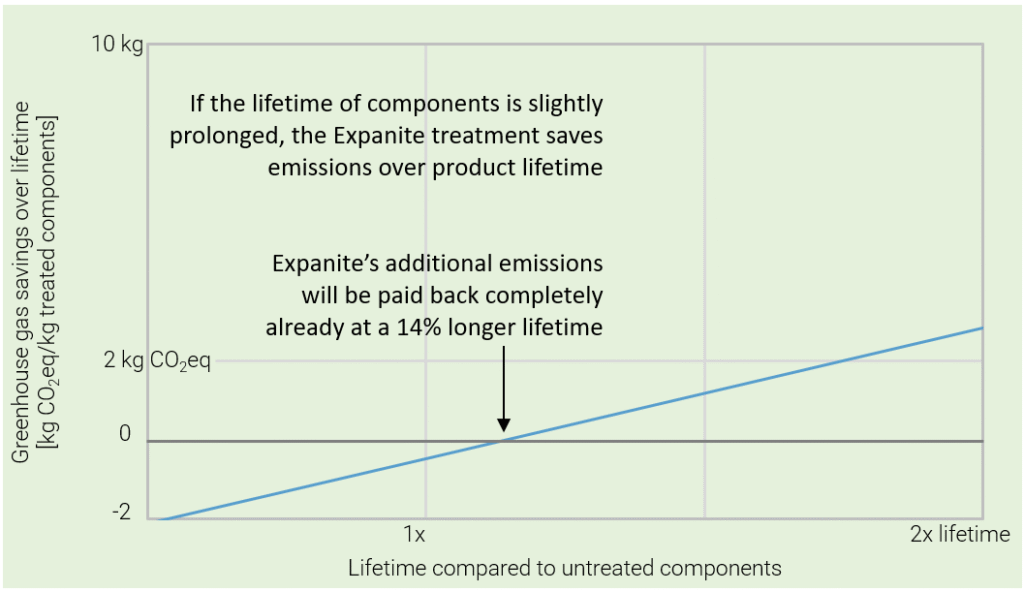
The findings of the LCA were very positive. The climate impact of Expanite’s processes on stainless steel surface hardening leads to only 0,23-0.46 kg CO2 eq per kg of treated material. When compared to the 10.5 kg CO2 eq/kg emissions of untreated stainless steel, the Expanite process adds only 2-14% of greenhouse gas emissions. This very low impact justifies investing or switching to Expanite is environmentally responsible and economically sound. The LCA documents that the Expanite processes are free from fluoride, hydrochloric acid and/or cyanides. The processes generate no toxic waste and, perhaps even more importantly, do not use solvents. The soot emissions from the Expanite processes are so low that there are no health risks. All Expanite sites are fully compliant with local and national environmental standards.
“We know from our market research that sustainability, including decarbonization, is increasing in importance when selecting suppliers. Transparency has always been at the core of our business. Our doors are open, and customers are always welcome to visit our treatment centers around the globe. Expanite was born out of a wish to provide a more sustainable heat treatment solution. We challenge the industry: ask your current suppliers to provide data on their heat treatment solution. If they cannot show you documentation, maybe it is time to talk to Expanite,” says Thomas Sandholdt with a smile.
Expanites sustainable advantages are not only about carbon footprint. By combining the two process steps, Expanite eliminates the so-called eggshell effect, which occurs in most surface hardening methods. This gives you a superior material performance for numerous applications, including pumps and valves for the food processing industry. Other applications that enjoy the uniform benefits of improved wear, galling and corrosion are Automotive, Oil & Gas, Marine and many others.
Expanite offers state-of-the-art solutions for surface hardening treatment of stainless steels and titanium.
With Expanite’s processes, it is possible to increase the material’s surface hardness tenfold while at the same time maintaining and even increasing its corrosion resistance. Expanite is a global organization with a combined development and production facility near Copenhagen, Denmark, and hardening capacity in both US, Germany, Korea and China. Expanite’s solutions are flexible and can be introduced directly into a customer’s own production line as part of a licensing arrangement. Learn more on www.expanite.com.

As the days get longer and brighter, we bring you fresh insights into how Expanite continues to push the boundaries of material surface hardening.
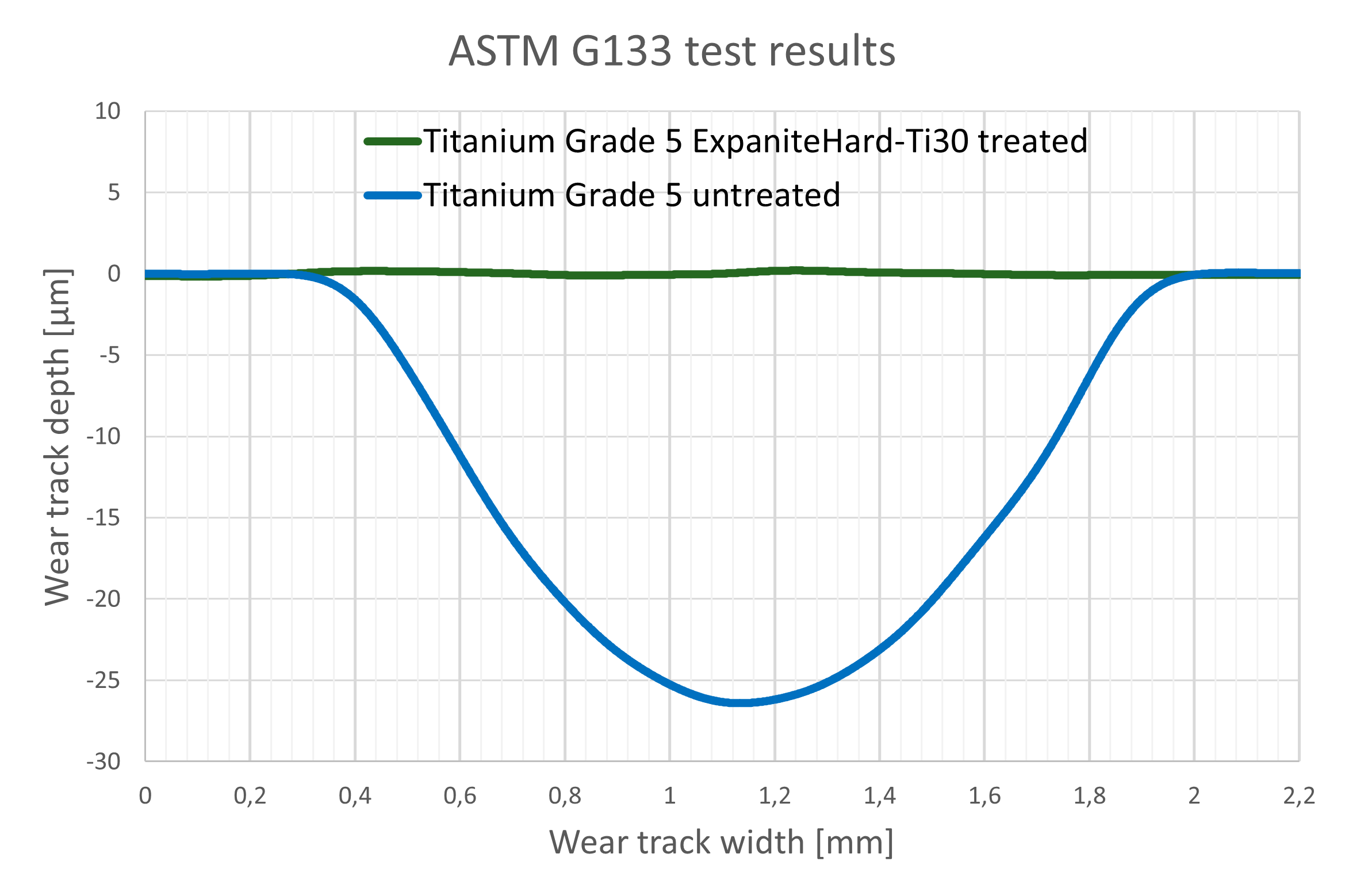
In this newsletter, we share insights on how our ExpaniteHard-Ti process achieves an industry-leading 370x wear resistance improvement for Titanium Grade 5.
You will also get to know more on our CTO, Thomas Strabo Hummelshøj, in our “Meet the Tech Team” series, explore why industries are moving away from hard chrome plating, and meet our newest colleagues across Europe and the U.S.
Finally, if sustainability is a priority for you, we offer full transparency on the environmental footprint of our processes with our independently verified LCA data.

Expanite® is expanding its U.S. Operations and Organization – adding signicant Heat Treatment Capacity and New Technologies! Expanite, the innovative heat treatment and surface hardening provider, is signicantly expanding its U.S. operations. As part of this strategic investment, Expanite is making its ExpaniteHard-Ti process for surface hardening of titanium available to North American customers, alongside the widely adopted SuperExpanite® processes enhancing wear, galling and corrosion resistance of stainless steel, nickel-based, and other specialty alloys. New Facility, Bigger Volumes, Larger Parts, and New Capabilities Expanite Inc., a subsidiary of Expanite A/S based in Denmark, is signicantly expanding its operations in North America with a major investment in a larger facility, tripling its heat treatment and surface hardening capacity.
Expanite Inc. is relocating to a new and larger facility in Twinsburg, Ohio and bringing in new furnaces to meet the growing demand for advanced surface hardening and heat treatment solutions across a wide range of industries. The new advanced furnaces – with chamber sizes up to 24x24x36” – are supplied and installed by Seco/Warwick. The new equipment will allow Expanite to process larger and more complex components while maintaining the unique hardening quality, widely accepted for improving product performance on stainless steel. The increased capacity and capabilities will further enhance the lead times and flexibility that Expanite is known for. This strategic expansion not only boosts Expanite’s ability to serve a growing number of industries such as pumps, valves, food & beverage processing equipment, medical devices and automotive, but also aligns with the company’s commitment to sustainability by offering greener alternatives to traditional technologies
“Our investment is all about meeting the growing demands from our North American customers,” says Thomas Sandholdt, CEO of Expanite. “We’re now able to handle much larger volumes while maintaining the fast lead times and flexibility that our customers expect from Expanite.” Expanite is bringing Patented Technology USA Commercial Heat Treater Expands for Hardening of Titanium to North America Expanite Inc. is now not only offering its well-known SuperExpanite processes for stainless steel but also its patented ExpaniteHard-Ti process — an advanced surface hardening solution designed for hardening of titanium parts.
Previously ExpaniteHard-Ti was only available from Expanite’s headquarters in Denmark. The ExpaniteHard-Ti process significantly improves wear and galling resistance, extending life and expanding the possible applications of titanium components. “Our expanded capabilities mean we can now offer our full range of Expanite technologies, including the processes for titanium, right here in the U.S.”, added Claus Løndal, Country Manager, North America “This allows us to serve a wide range of customers while reducing lead times and costs”. Expanding Heat Treatment Capabilities Besides the proprietary Expanite standard vacuum heat treatment processes are offered from Expanite.
This includes hardening of tool steels (D2, A2, M2, H13, etc.), austenite annealing of stainless (304, 316, etc.), precipitation treatment of PH-steels (17-4PH, 13-8PH, etc.) and specialty treatment of alloys (Inconel 718, MU-metal etc.). The addition of vacuum heat treatment solutions extends Expanite’s capabilities, offering more solutions, and greater flexibility and ensuring customers receive hardening solutions tailored to their specific needs. A Stronger Team, A Stronger Presence To support this expansion, Expanite Inc. has also strengthened its team with additional specialists in surface hardening and heat treatment, ensuring that the growing demand is met with the highest level of service and expertise while reinforcing the company’s commitment to sustainability and innovation.

Expanite offers an innovative technology that prevents wear, galling, and corrosion of components in stainless steel or titanium by hardening the material in a pure-gas environment without using harsh chemicals, leaving no toxic waste and with a low carbon footprint.
Hardening of parts such as gears and other essential products made from stainless-steel alloys is a vital and necessary process to ensure those parts perform optimally.
Expanite, a company that was born from research at The Technical University of Copenhagen, has grown its innovative process of hardening stainless steel more efficiently than previous methods.
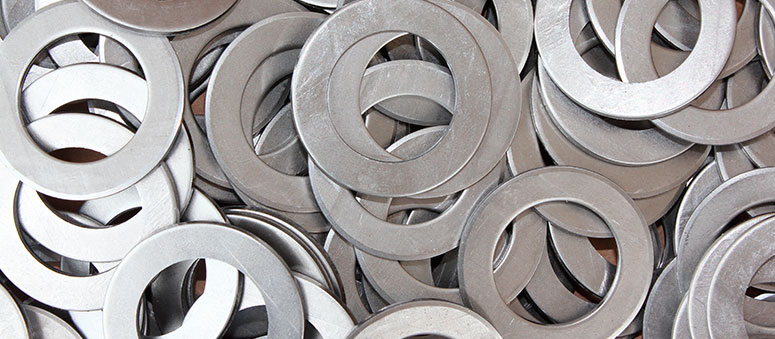
Besides the proprietary processes for stainless steel and titanium, Expanite offers specialty heat treatment solutions including hardening, tempering, solution treatment, aging, and annealing for nickel-based alloys such Monel®, Inconel® or Mu-metal, stainless steels, titanium, and other specialty materials.
“You can easily take stainless steel and put it in and harden it, but you lose corrosion properties right away if you don’t know how to do it,” said Claus Løndal, country manager North America with Expanite. “We do that without losing corrosion properties.”
The beauty of Expanite’s hardening process is it works with any stainless-steel alloy, according to Løndal.
“We can take all stainless-steel alloys – and I mean every stainless-steel alloy, as long as they are defined as stainless steel,” he said. “That means that it has to have around 12 percent chrome in the alloy. And we can harden them all. We can also harden some other alloys and titanium.”
Stainless steel is an amazing material, according to Løndal, but it isn’t a very hard material.
“If you go out and — you probably have a refrigerator or a dishwasher that is a stainless-steel surface – and if you take a knife, you can scratch it, or you can scratch it with your fingers; that’s how soft it is,” he said. “We can harden it almost 10 times as hard as that in the surface. It’s a surface hardening of the material. Our advantage is that you don’t see a drop in corrosion properties after our process.”
Corrosion is a common problem when dealing with stainless steels, and — if not dealt with — can become a hazard for industries using food and beverage equipment or medical and aerospace sectors, according to Løndal.
“You don’t want your parts to corrode because, at some point, it will corrode so much that it goes to pieces,” he said.

Corrosion resistant stainless steel is widely used in industry and trade due to its outstanding properties. Despite its numerous advantages, particularly its resistance to corrosion in numerous media, stainless steel also has considerable weaknesses that sometimes severely limit its application.
One of these weaknesses is its susceptibility to cold welding or galling, which can occur particularly with screw connections. Surface hardening offers a solution to this problem.
Galling can be favoured by various aspects, such as insufficient surface hardness, excessive roughness or lack of lubricants. Nevertheless, fasteners are essential in many applications to allow for particularly frequent assembly and disassembly, or high tightening torques. It is therefore important to carefully tailor the properties of such elements.
When fasteners are jammed due to galling, their removal can turn out to be an enormous challenge, especially if it needs to be done without damaging the affected bolt or destroying the associated nut. Surface hardening, a process in which only the surface layer (few to tens of microns) of a workpiece is hardened, has been proven to significantly improve the seizure behaviour of stainless steel screws. The diffusion-based process increases the hardness of the surface through solid solution hardening and subsequently reduces its susceptibility to plastic deformation. Depending on the material, the corrosion resistance is maintained or even improved, and the stiffness of the base material is not impaired

Surface hardening is not an applied coating, but a diffusion-based thermo-chemical surface hardening process. Although classic processes for the surface hardening of corrosion resistant stainless steels have been available to the industry for some time, their application has two main disadvantages. Firstly, all classic processes such as salt bath processes are known to reduce corrosion resistance. On the other hand, the hardness values of stainless steels usually hardened with nitrogen or carbon drop very quickly, i.e the hardening depth is only a few micrometers and the underlying base material is very soft, which can potentially lead to the ‘eggshell’ effect.
In contrast, Expanite has developed its proprietary technology SuperExpanite®, having solved those shortcomings as a priority. With this technological process not only the outermost layer but also the underlying material is hardened to a greater depth, which also contributes to an improvement in corrosion resistance in many cases.
A two stage process is used in Expanite’s treatment for stainless steels, in which nitrogen is introduced deep into the surface area in the first step called ExpaniteHigh-T (high temperature process), whereby the material is hardened to approximately 300HV for austenitic materials and 850HV for alloys with martensitic structure to a depth of up to 1mm. In the second process step, ExpaniteLow-T, the workpiece is heated to temperatures below 500°C and the surface layer is hardened to 1,100HV – 1,300HV at a hardening depth of 5μm – 30μm (depending on the solution). The hardening is achieved by incorporating large amounts of interstitial carbon and nitrogen.
By combining the two process steps, the so-called ‘eggshell’ effect, which occurs in most surface hardening processes, is avoided. This offers a decisive advantage for numerous applications that require improved load-bearing capacity.


Expanite has achieved remarkable outcomes through the application of SuperExpanite® hardening on AISI 316/1.4404 stainless steel intended for metallic food contact material. The testing, conducted in line with the Council of Europe Resolution CM/Res(2013)9, specifically targeted scenarios involving repeated food contact. Consequently, Expanite’s surface hardening process has been deemed safe for use in food contact applications.
The test results underscore the exceptional performance attained through Expanite’s surface hardening technique. The treated AISI 316 stainless steel showcased outstanding resistance and adherence to the rigorous conditions stipulated in the CM/Res(2013)9 test.
The tests was conducted in accordance with the Council of Europe Resolution CM/Res(2013)9, focusing on repeated food contact scenarios. The CM/Res(2013)9 is a stringent standard that evaluates the compliance of materials with all types of food, under various contact conditions. These conditions include heating up to 70 °C for up to 2 hours or up to 100 °C for up to 15 minutes, without prolonged storage at room temperature or in a refrigerated state.
The tests results show the exceptional performance achieved through Expanite’s surface hardening on stainless steel – the treated AISI 316 stainless steel exhibited remarkable resistance and compliance with the stringent conditions outlined in the CM/Res(2013)9 test. In the larger perspective, it means that it’s considered safe to apply Expanite surface hardening to on stainless steel – and thereby combining this safety with superior wear resistance.
The surface hardening and heat treatment applied by Expanite not only meet but exceed the expectations for materials used in repeated food contact applications. The enhanced properties of the treated stainless steel make it an ideal choice for various industries, including those requiring compliance with strict regulatory standards.

Although this regulation came into effect in 2007, it gained more attention in 2013 when Chromium Trioxide (Chromium(VI) oxide) was added to the list of substances requiring authorization because of its carcinogenic and mutagenic properties.
Chromium(VI) oxide stands out from other substances on this list because of its wide range of applications. It is primarily used for surface treatments, whether for enhanced corrosion protection or the production of visually attractive surfaces. As a result, many industries, such as the electroplating industry and mechanical engineering, are feeling the impact of this regulation.
In general, coating methods that can prevent corrosion tend to add material and are often inconsistent in terms of the thickness of the applied layer. This can result in material accumulations on flat structures or material thinning at corners and edges where protection is reduced. Additionally, coatings may crack and peel off during significant expansion or contraction of the base material due to differences in the thermal expansion coefficient between the base and the coating. Complex contours with undercuts and small openings pose additional challenges, and certain coating methods are not compatible with these surfaces. Expanite takes a different approach to this process that avoids these issues.
A solution to the above-mentioned problems involving stainless steels is surface hardening. This is not a coating process but a diffusion-based surface hardening process. Traditional methods for surface hardening corrosion-resistant stainless steels have been available to the industry for some time. However, they mainly have two disadvantages: they reduce corrosion resistance, and the hardness value of steels hardened with nitrogen or carbon often decreases rapidly at the material core. This means that the hardening depth is only a few microns, and the underlying structure is very soft, which can potentially lead to an “eggshell effect.”
Expanite has developed a method that hardens not only the outermost layer, but also hardens the underlying material to a greater depth. In many cases, this also results in improved corrosion resistance.
The Expanite treatment for stainless steels involves a two-step process. In the first step (high-temperature process), nitrogen is introduced deep into the surface zone, allowing the material to achieve a hardening up to 1mm in depth ranging from approximately 300 HV (austenitic materials) to 850 HV (martensitic materials). In the second step, the so-called low-temperature process, the workpiece is heated to a maximum of 470°C, and the surface layer is hardened to a depth of 5-30μm, achieving 1100-1300HV (see photo 1), through the embedding of carbon and nitrogen. Combining these two processes prevents the aforementioned “eggshell effect” and offers significant advantages for different kinds of applications.
Despite its widespread use, hard chrome plating has several disadvantages. Harmful chemicals such as chromic acid, sulfuric acid, lead, lead chromate, and lead oxide are all used in the process. Additionally, it is largely inefficient with at least 70% of the electrical energy being wasted.
SuperExpanite®, the trade name for the layer produced in the Expanite’s two-stage process, stands out for its resource-saving approach. It neither consumes natural re-sources nor produces polluted wastewater. With a low energy consumption of only 1.9 kWh/kg of hardened stainless steel and without the use of harmful chemicals, it offers an environmentally friendly and sustainable alternative to hard chrome plating, which also extends the lifespan of fittings.


The nitrocarburizing process developed by Expanite enhances both the hardness and corrosion resistance of stainless steel materials – and not just for individual alloys. Therefore, the process is also recommended for medical device applications. It extends the lifespan of the respective application, thereby increasing patient safety and reduces cost.
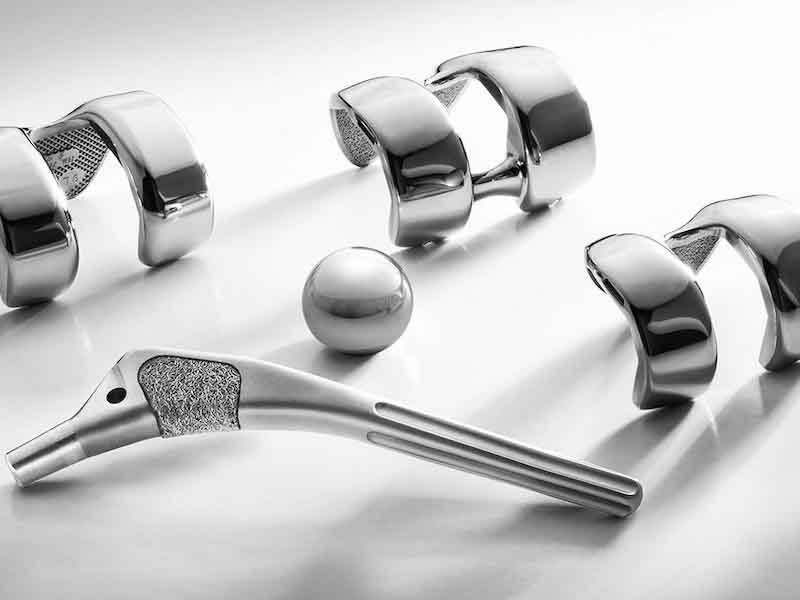
Because of its unique properties and versatility, Stainless steel is an essential material for medical devices and implants that frequently encounter liquids and tissue. The corrosion resistance of stainless steel guarantees an extended lifespan and prevents the development of rust or other forms of damage that could compromise the functionality and safety of medical products.
For decades, corrosion-resistant stainless steel has been extensively used in the field of medical technology and is offered in a diverse array of alloy variations in the market. Numerous companies opt for these materials due to their corrosion resistance, with particular emphasis on the austenitic and duplex variants. Nevertheless, , these options are challenged by their susceptibility to wear attributed to their relative low hardness, often resulting in issues such as galling.