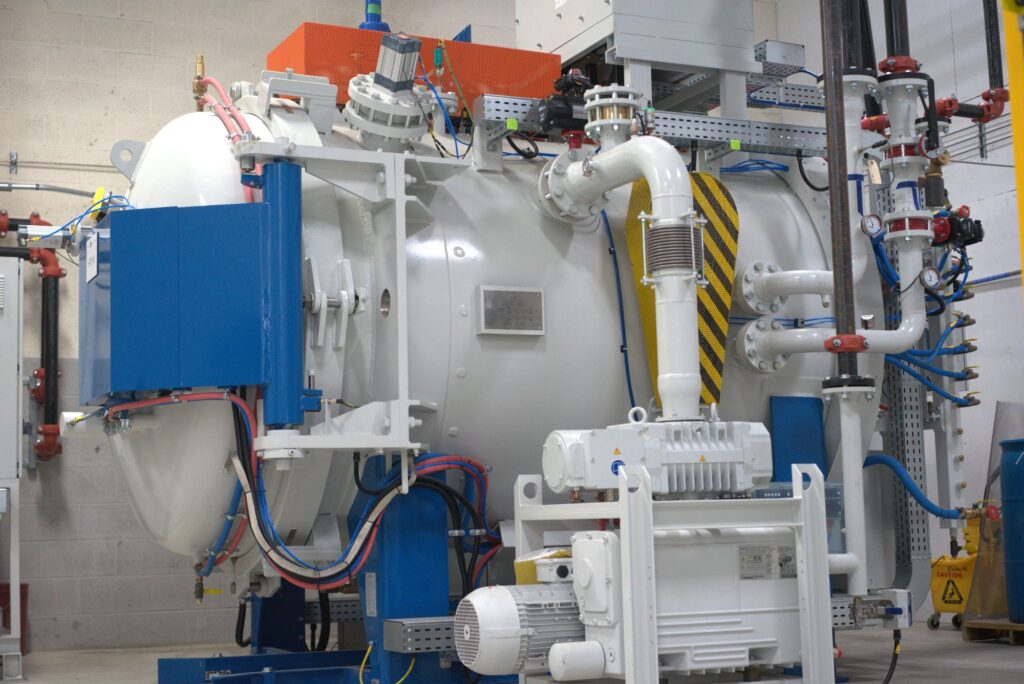
Ramén Valves, a leading manufacturer of industrial valves for the process industry, has announced its commitment to a more sustainable future by eliminating the use of hard chroming in its manufacturing processes. Instead, the company has adopted the more environmentally friendly SuperExpanite® treatment, a gas-based process that yields no toxic waste and has the lowest carbon footprint in the industry.
Upcoming regulations spark the need for more environmentally friendly surface hardening processes
Hard chroming is a process that increases the hardness of parts in contact with abrasive media, making it a popular solution in the valve industry. However, with the upcoming European Commission’s REACH Committee’s agreement to eliminate the use of chromium trioxide in most manufacturing processes by September 2024, many companies have been seeking alternative solutions. While some hard chroming companies have been promoting the use of alternative chemical solutions, Ramén Valves has decided to go a step further and eliminate all hard chroming solutions.
“We are committed to protecting people and the environment from harmful chemicals, whether they are currently allowed or not. That’s why we have been researching alternative solutions for many years now and have found a successful solution in the SuperExpanite® treatment.” says Per Wennersten, CEO, Ramén Valves.
A gas-based process with no toxic waste
SuperExpanite® is a patented surface hardening technology, invented by the Danish company Expanite, that increases the hardness, wear-resistance, and improves corrosion resistance of stainless steel and titanium components. The treatment is performed without the use of harmful chemicals and results in a surface layer that is up to 10 times harder than the original material. Ramén Valves began testing the SuperExpanite® treatment in 2019 with excellent results and has decided to adopt it as its standard hardening treatment. This decision not only ensures compliance with the new regulations but also reflects Ramén Valves’ commitment to sustainability and responsible manufacturing practices.
“We believe that by eliminating the use of hard chroming and adopting a pure gas-based process like the SuperExpanite® treatment, we can reduce our environmental impact and contribute to a safer, healthier future for everyone,” says Stéphane Blanchet, Sales Manager, Ramén Valves.
Innovation and sustainability go hand in hand at Ramén Valves
Ramén Valves has a long history of innovation and excellence in the valve industry, and this latest decision reinforces its commitment to provide high-quality, sustainable solutions to its customers. With the adoption of the SuperExpanite® treatment as its standard hardening treatment, Ramén Valves is poised to continue its leadership in the industry.
About Ramén Valves
Ramén Valves is a leading manufacturer of industrial valves for the process industry, including pulp and paper, power generation, mining, and chemical processing. With a focus on innovation, quality, and sustainability, Ramén Valves has established itself as a trusted partner for its customers worldwide.
Expanite, the Danish pioneer and growth company within hardening and heat treatment of stainless steel and titanium, receives its largest capital increase to date. Approximately 12 years after the company was created out of a research project at the Technical University of Denmark, having built a solid business in Europe and having established a strong foothold in the US and Asia, the company will further expand its activities in the US as well as strengthen its presence and offerings in Europe and Asia.
The technology of the company is based on a series of patented processes for high performance, gas phase based hardening/heat treatment of stainless steel and titanium with a reduced environmental impact. Expanite offers a fully digitalized approach to surface hardening, production management and quality control, with a business model that involves a chain of its own service centers as well as technology licensees.
In addition to being able to deliver services that significantly extend the life of components – offering sustainability in its purest form – Expanite’s way to achieve the extended lifetime of materials is the green alternative to environmentally challenged processes such as hard chrome plating and standard stainless steel hardening involving aggressive chemicals and long process times with associated high energy consumption. Expanite’s patented solutions are gas-based, shortening processing time, reducing the overall energy consumption, and eliminating the need for harsh chemical cleaning before/after processing.
Expanite’s CEO Thomas Abel Sandholdt adds: “We are very proud and humble by the sign of confidence that lies behind the biggest strengthening of Expanite’s capital to date. At times when the clouds over the world economy are darker than seen in a long time, Lauritzen Fonden and Finindus have shown that they believe in Expanite’s potential and support an accelerated growth. With this capital increase, we can realize a very ambitious growth plan that involves geographical and product expansions.”
(Article en anglais)
MAN Diesel & Turbo’s newest generation of gas driven engines already plays a key role in the sector’s fuel conversion from oil to alternative energy. When developing the engine, Expanite and MAN Diesel & Turbo collaborated in solving the installation of their gas injection valve in the engine. An important part of the solution came from Expanite – a surface hardening technology that makes stainless steel extremely wear and corrosion resistant.
Per Brandt, manager at MAN Diesel & Turbo, said: “Originally, we had specified a chrome plating in our cylinder cap for mounting our gas injection valve, but it could not always stay tight as there were high requirements for chrome surface quality. We tried unsuccessfully with different solutions. Fortunately, someone had heard about Expanite’s surface hardening, and although stainless steel is usually softer than chrome surface, it turned out to be the solution. A design change coupled with Expanite’s hardening technology solved our challenge.
“In cooperation with Expanite we relatively quickly found a hardening that made our surface resistant against scratches and corrosion. The solution passed our test in service where the system remained sealed and tight and in addition the solution was also easy and cost efficient to implement. »
A cheaper and greener solution solves challenges
Expanite is a Danish growth company established in 2010 by three experts in materials and surface hardening from the Technical University of Denmark. In short, the technology is a gas-based treatment of the surface of stainless steel or titanium, so that corrosion resistance is improved and the hardness is multiplied (eg up to 1200HV 0.05 in stainless steel). This eliminates wear and galling, and the lifespan of the parts is increased by a factor of ten.
« Expanite’s processes are significantly more environmentally friendly and sustainable as opposed to chrome baths », Claus Løndal, European sales director at Expanite, emphasised. « With Expanite, we have the opportunity to change the rules and extend the limits for what qualities you can expect from stainless steel. In addition, our solutions have the advantage that the equipment and processes can be easily implemented directly by our customers. »
It is expected to be a huge international market for Expanite, whose technology is protected by patents. Expanite has already established service centres in Denmark, Germany, the USA and China, and customers are today coming from the automotive, medical, food and pumps and valves industries, but the demand for more resistant and durable stainless steel products is wide also in the marine sector. « We have had a very positive beginning with Expanite, and as the equipment is to deliver more and more and is pushed to the limits, the need for extra hardening of vital components will also increase », Per Brandt added.
The German MAN Diesel & Turbo has roots dating back to the 18th century and is today the world’s leading supplier of large diesel engines for marine and stationary plants. The two-stroke engines department is headquartered in Copenhagen, which designs engines and propulsion solutions under the brand MAN B&W
Expanite is based on uninterrupted research since 2000 and was founded in 2010 by leading experts in materials and surface hardening. The company is headquartered in Hillerød near Copenhagen and has hardening capacity in the USA, Germany and China. In addition, Expanite’s solutions are flexible and can be tailored to be introduced into a customer’s own production line as part of a licensing arrangement.
(Article en anglais)
The results of a long-term corrosion test show in particular the superiority of the Expanite technology over traditional methods. A horror for every assembler: galling of stainless steel fittings. A drop of lubricant on the thread helps, but what if, due to for example hygienic requirements, no lubricants may be used, or it is simply forgotten?
Stainless steel, with its excellent corrosion resistance, has the disadvantage that when having steel-to-steel contact, it tends to gall. Applying coatings such as DLC or diff usion processes such as Kolsterising® carburizing, nitrocarburizing or plasma nitriding have proven eff ective in counteracting this effect. However, these processes are not only very costly, but also generally have a negative effect on corrosion resistance.
Improved galling and corrosion resistance
With its processes specially developed for stainless steel, Expanite has overcome this dilemma, using its patented technology to improve corrosion resistance of components during hardening and at the same time make them resistant to wear and galling. In this context, TCW Anlagenbau, located in Germany, recently carried out extensive long-term corrosion tests on different stainless steel grades.
While the traditionally hardened components made of 316Ti (1.4571) seen in Figure 1, Figure 2 and Figure 3, show a comparatively strong corrosion attack in the salt bath after a short time, the fittings 316Ti (1.4571) and cutting rings 316Ti (1.4571 and 1.4462) treated with the SuperExpanite show no corrosion even after two months in 10% salt bath solution.
In the case of 303 (1.4305), which is basically less resistant, a tendency towards improvement in corrosion resistance could be demonstrated as the unhardened nozzle (Figure 4) shows a significantly stronger corrosion attack than the component treated with the Expanite process (Figure 5).
Sustainable Against Wear & Galling
“Galling of stainless steel components is a well-known problem and we regularly hear from our customers about cases where the galling of a classic screw connection means that entire component have to be replaced at great expense,” explains Dr. Holger Selg, Expanite Sales Director DACH and application expert. “Ideally, both friction parts are treated with the SuperExpanite, but hardening only one component already provides a significant improvement in terms of galling resistance.”
The relatively low hardness of stainless steel also makes corresponding components susceptible to abrasive wear. Here too, the surface hardening of Expanite provides a remedy and extends the service life compared to unhardened stainless steel components. “Sustainability is playing an increasingly important role,” says Dr. Selg. “Expanite also scores points over comparable wear protection processes with a significantly more energy-efficient and environmentally friendly gas-based diffusion process that does not require time-consuming cleaning of the parts, e.g., with aggressive chemicals after hardening.”
Broad Spectrum of Materials
Expanite technology, specially developed for corrosion-resistant materials, offers a solution for austenitic, martensitic, ferritic and duplex stainless steels as well as for nickel-based alloys like Inconel® and Hastelloy®. ExpaniteHard-Ti, developed by the Expanite team to market maturity in recent years, is used for titanium grades
(Article en anglais)
Hydrogen – whether applied in shipping, steel production, refineries or power-to-x application – it has become the energy source of the future, yet already used in many sectors. Due to its special properties, the hydrogen gas poses several technical challenges for the respective components with which it comes into contact, so that the use of corrosion-resistant stainless steel is essential. This in turn is susceptible to wear and galling and this is exactly where the technology of the Danish pioneer for surface hardening of stainless steel and titanium comes into play.
Hydrogen – the element that comes first in the periodic table and is therefore the smallest and lightest atom among all elements – has been traded for some time as the greatest hope for future energy supply. With a mass fraction of about 70%, hydrogen is the most common chemical element in the universe. On Earth, however, its mass fraction is only 0.87% and is largely bound in water.
Starting with production, over to transport ending with the actual usage, wherever hydrogen is involved, stainless steel components are also used, some of which are subject to extreme wear depending on the application and naturally subject to galling. In the past, this problem was countered with traditional wear protection methods and the respective components were protected with a coating (e.g. hard chrome plating, DLC or chrome carbide) or classic plasma nitriding or salt bath diffusion layers. However, these processes are generally known to affect the corrosion resistance of the stainless steel parts negatively.
The solution to this dilemma – a surface hardening that protects against wear and galling while at the same time maintains or even improves the corrosion resistance of the materials – was developed by the founders of the Danish company Expanite and is increasingly being used in the hydrogen sector. For example, components of high pressure and control valves or clutch systems used in the hydrogen infrastructure up to components for fuel cells are hardened. Sustainably prevent hydrogen embrittlement
Improves wear resistance on stainless steel components
“Our customers often ask whether the Expanite technology increases the risk of hydrogen embrittlement, which is not the case,” explains Dr. Holger Selg, application expert and Expanite Sales Director DACH, who going further into detail: “The cause of the hydrogen embrittlement can be traced back to the diffusion of the hydrogen into the material, and in theory the Expanite layer acts as a diffusion brake to a certain extent. Charged with nitrogen and carbon, the Expanite surface is harder for the hydrogen to penetrate than an untreated surface.”
Expanite – The technology of the Danish pioneer for surface hardening of stainless steel and titanium is
used more and more frequently when it comes to alternatives to classic fluoroplastic coatings such as Teflon®, Halar® or Xylan®. In addition to technical and commercial advantages, the environmental compatibility and sustainability of the Expanite process are playing an increasingly important role for customers.
After the discovery of PTFE (polytetrafluoroethylene) – also known as Teflon® – in 1938, some time passed before technically usable applications for the highly inert material paved their way. Today, coatings based on per- and polyfluoroalkyl substances (PFASs), known by their trade names such as Teflon®, Halar® or Xylan® or more generally referred to by the abbreviations ECTFE, PFA, FEP, ETFE, PVDF etc., are applied in many areas to optimize the sliding and non-stick properties as well as wear and corrosion resistance of components
In addition to the well-known disadvantages of coatings, i.e. inhomogeneous layer thicknesses, layer detachment and increased corrosion attack if the coating is damaged, PFAS-based products have another substantial deficit: the highly stable and therefore not completely degradable carbon-fluorine compounds are harmful not only for humans but also to the environment and can cause cancer, among other things.
Accordingly, there has been a trend towards avoiding the use of these materials since the early 2000s, and especially when it comes to improving wear and corrosion resistance, Expanite surface hardening offers a cost-effective and sustainable alternative.
The Expanite technology is based on a gas process in which carbon and nitrogen are diffused in the component surface. The otherwise comparable soft and wear-prone stainless steel material hardens by a factor of up to 10 and while classic diffusion processes impacting corrosion resistance of the material, the Expanite processes generally improve the corrosion properties of the component.
Sustainable against wear and galling
Besides the elimination of carcinogenic substances, Expanite’s gas-based diffusion process is significantly more energy-efficient and environmentally friendly than comparable wear protection processes, and thanks to the treatment in a vacuum, no time-consuming cleaning of the parts, e.g., with aggressive chemicals, is necessary after hardening.
« The different cases in which Expanite is used as an alternative to such plastic coatings are widely spread and can be found, for example, in the areas of pumps and valves, food & beverage or general industrial applications, » explains Dr. Holger Selg, application expert and Expanite Sales Director DACH, and continues: « First and foremost, we increase the wear and galling resistance of stainless steel components. By hardening the surface, the sliding properties are improved at the same time and, depending on the application, offer an adequate replacement for fluoroplastic coatings.”
The Expanite technology, specially developed for corrosion-resistant materials, offers a solution for austenitic, martensitic, ferritic, and duplex stainless steels as well as for expensive nickel-based alloys such as Inconel and Hastelloy. Moreover, ExpaniteHard-Ti, which the Expanite team of experts has developed to market maturity in recent years, is used for titanium grades.
Diamond-like carbon or DLC coatings are today used in many areas where excellent friction properties and good wear resistance are required on component surfaces. The DLC layers applied by complex, time-consuming and costly PVD or PACVD processes are usually only a few micrometres thick. If the part also is required to be corrosion-resistant, making the use of stainless steels mandatory, the DLC system has some weak points. The soft stainless steel as the carrier medium and the correspondingly high hardness gradient to the thin DLC layer promote the eggshell effect this might lead to a defect in the coating, and it will easily start peeling off.
Expanite (Copenhagen, Denmark) offers state-of-the-art solutions for surface hardening treatment of stainless steels and titanium. With Expanite’s processes, it is possible to increase the material’s surface hardness tenfold while at the same time maintaining and even increasing its corrosion resistance.
The Expanite technology, specially developed for corrosion-resistant materials, offers a solution for austenitic, martensitic, ferritic and duplex stainless steels as well as for expensive nickel-based alloys such as Inconel and Hastelloy. The new special process ExpaniteHard-Ti, which the Expanite team of experts in Denmark has developed to market maturity in recent years, is used for titanium materials.
Diffusion hardness layer
Surface hardening of Expanite brings the solution using a gas-based diffusion process to store carbon and nitrogen deep in the component surface. This guarantees a better load-bearing capacity and efficiently counteracts the eggshell effect. If defects occur in the hardness layer while the part is in use, this does not lead to further flaking because, in contrast to the applied DLC layer, the Expanite technology is a diffusion hardness layer that is coherent with the base material.
Environmentally friendly
In addition to technical and commercial advantages, the sustainability of the Expanite process is playing an increasing role for customers. The gas-based diffusion process is significantly more energy-efficient and environmentally friendly than comparable wear protection processes and, thanks to the treatment in vacuum, no time-consuming cleaning of the parts, e.g., with aggressive chemicals, is necessary after hardening with the Expanite process.
“We have already replaced the classic DLC coating in various applications, from the typical running and sealing surfaces in bearings, through pump components or knife edges to applications in medical technology,” explains Dr. Holger Selg, application expert and Expanite Sales Director DACH, and continues: “In some cases, the two technologies were also combined and a DLC layer was applied in addition to our Expanite hardness layer in order to obtain a very resilient system.”
(Article en anglais)
With more than 20% of the turnover coming from hard chrome replacement projects, Expanite, the Danish pioneer within surface hardening of stainless steel, is on its way to position itself as one of the most used alternatives for hard chrome plating.
Finding a replacement for hard chrome plating can be challenging, and with EU regulations lowering the limit value for hexavalent chromium, the industrial markets need to find alternatives. Hard chrome plating, in various forms, has been one of “the standards” to improve resistance towards wear and corrosion for stainless steel components. And as new solutions are required, Expanite’s hardening technologies have documented their effectiveness within the automotive, pumps, valves and food processing equipment markets.
Sustainable Solutions, Diffusion vs. Coatings
Unlike a hard chrome coating, where the electrolyte used during processing may contain hexavalent chromium ions (Cr6+), which are hazardous to human health and environmentally harmful, the Expanite treatments involves only nitrogen and carbon atoms. This makes Expanite an environmentally friendly and sustainable process.
Expanite effectively removes the native oxide film covering stainless steels during the first steps of the gas process without adding any aggressive chemicals, and this allows controlled diffusion of carbon and nitrogen atoms in the underlying stee, thereafter.
Nitrogen/Carbon Diffusion Replacing Hard Chrome Plating
“More than 20% of the parts we are processing today with the Expanite process are replacements for hard chrome plating,” says Thomas Abel Sandholdt, CEO at Expanite. Whether it’s the valve parts of a fuel injector within automotive, a bushing for marine engines or the rotor for a large pump, they have all experienced the benefits of choosing a diffusion process with no risk of coatings cracking or inhomogeneous hardening zones. And along with that comes the compliance with the EU Reach program on reduction of Cr6+ as well as the fundamental decision to move towards more sustainable solutions.
Commenting about replacing hard chrome with Expanite, Sandholdt highlights opportunities in the automotive industry with valve components. “Independently of each other, three major suppliers to the automotive industry approached Expanite,” says Sandholdt. “They all produce fuel injectors with valve components in ferritic stainless steel, which traditionally were hard chromed plated. All three were facing issues such as wear, general quality problems and high cost.
And they all found various solutions within the Expanite toolbox. The first of the three projects went into serial production in January 2020, while the two other projects are scheduled to begin serial production in 2021 and 2022. “As we are often our customers´ biggest secret, many will not allow us to reveal that we actually have helped them change from hard chrome plating.”
Competitive Cost
From the first look, Expanite hardening technology might seem costly compared to hard chromium plating. However, Sandholdt says that he is convinced the price difference will equalize, once total life cycle cost and performance are taken into account. According to Sandholdt, “The proof lies in the decisions made by so many of Expanite’s customers.”
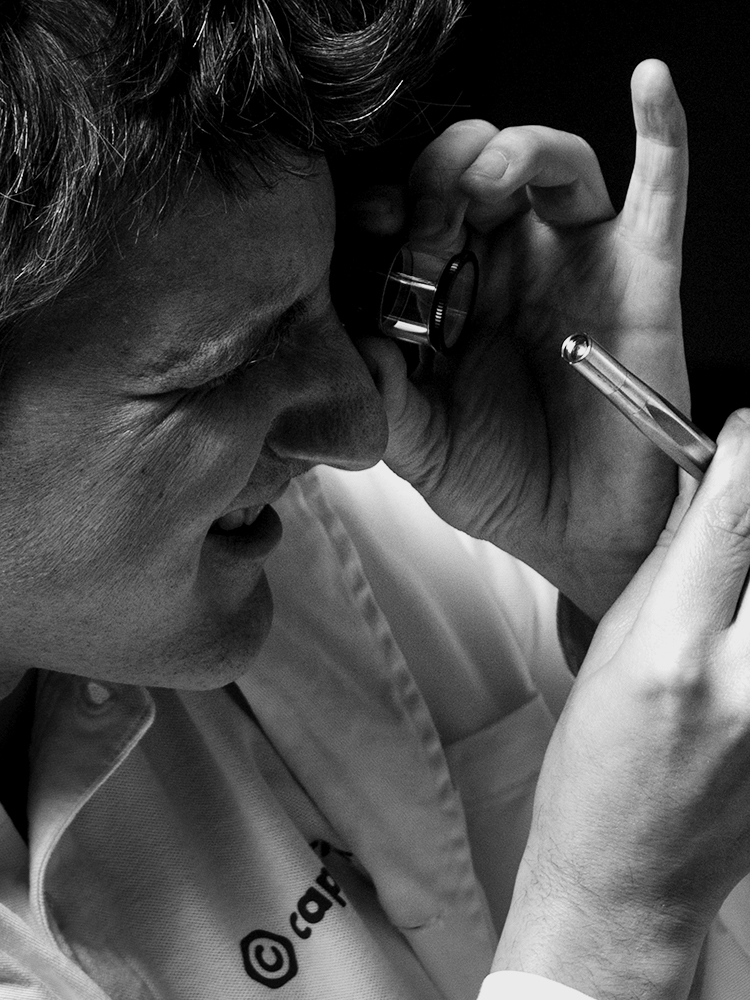
With the ambition of creating the ultimate fountain pen, combining innovative production methods with advanced materials, Capillaris reached even further by seeking Expanite’s help with hardening the surfaces of the unique writing tool. The result is a fountain pen designed by aerospace engineer Zsolt Pataki, made from a solid titanium bar for the ultimate weight, look and feel, hardened by ExpaniteHard-Ti making it long-lasting and virtually unscratchable.
Hunting for the superior scratch resistance.
Aerospace engineer Zsolt Pataki got a crazy idea; he wanted to create a unique fountain pen using his experience from aerospace in design, materials, and manufacturing. He chooses titanium grade 23 from the very beginning of the development process, but also knew that he wanted to go further. Mr. Pataki states: “In my search for increased wear resistance of the titanium, I was eager to avoid the hurdles of a coating; adding layers affecting the dimensions combined with the risk of layers chipping off – as I preferred a monolithic design with the original titanium surface instead of a coating”.
In the search for alternatives to coating, Mr. Pataki attended a webinar with Expanite presenting their unique hardening solution for titanium. “I soon realized that the ExpaniteHard-Ti process was the only matured and commercially available interstitial hardening technology for titanium. The webinar combined with the details of the technology on their web site helped me to develop realistic expectations and I reached out to them”, Mr. Pataki continues
The solution
The ExpaniteHard-Ti process provides highly effective protection against wear and scratches. The method is not a coating process, hence all the drawbacks of coatings, including the risks of chipping/spalling off and inconsistencies in layers are completely avoided. In fact, it is the surface of the material itself, which is hardened. The ExpaniteHard-Ti process has a significantly greater level of protection against scratches than that afforded by the hardness of the base material and the hardened parts retains the design colour or as Mr. Pataki describe it: “I tried hard to scratch the pen after the process, but it is practically impossible – I made before and after comparison and the results are spectacular; the pen is now virtually unscratchable”!
Professional knowledge sharing
Through the dialogue with the Expanite team, the optimal solution to increase scratch resistance of the fountain pen was found – Mr. Pataki states: “Throughout the whole process, the Expanite team has been very supportive and open to discuss questions and possible issues ensuring that I got exactly the solution that suited my requirements for the pens and the fact that the results were much better than advertised in terms of case depth of the hardened zone!”
This article is a Q & A with Rune Strand regarding ExpaniteHard-Ti. Strand is project manager and material scientist at Expanite A/S, and he holds an MSc in material science and manufacturing. He has spent most of his career in the field of surface hardening and heat treatment of stainless steel.
Why is surface hardening of titanium relevant?
Surface hardening of titanium is relevant simply because titanium and titanium alloys by nature are soft and will exhibit poor wear resistance. This contradicts something we often hear: “Why would you need to harden titanium? Isn’t that really tough?” The truth is that titanium and titanium alloys are actually very tough, but toughness, hardness and strength are often confused with each other. In general terms, hardness is the feature that will give a material wear resistance, and titanium by itself is not very hard.
Where do you see a hard titanium surface being beneficial?
Basically, the sky is the limit, both figuratively and literally. The aerospace industry uses an abundance of titanium, and any part that exhibits wear will benefit from our surface-hardening technique. Currently, we have seen the highest demand from the Swiss watch industry, where the goal is to make titanium watch parts more scratch-resistant. We also see the applicability in the emerging 3D/additive manufacturing (AM) market as well as medical devices.
What methods exist today to increase surface hardness and improve wear resistance?
The most typical methods are anodizing and TiN coatings. Both of these are coating-type methods where the hardening effect is achieved by forming “something else” on the surface. This “something else” will have a good hardness and probably also decent wear properties. The drawback of these types of treatments is that there is a great risk of delamination of the coating, simply because it is “something else” than the underlying structure. Delamination can be initiated by temperature fluctuations, hard impacts, etc. and is often referred to as “the egg-shell effect.”
Is ExpaniteHard-Ti a coating?
ExpaniteHard-Ti is far from a coating. The process relies on diffusion of interstitial atoms into the original microstructure of titanium/titanium alloys.
What are the typical achieved specifications for hardness and depth?
Typically, we achieve 30 μm and 1000 HV hardness. The graph shows the total elimination of wear in a standard ASTM G133 pin on a disk wear test.
What are the benefits of an interstitial diffusion hardening process such as ExpaniteHard-Ti?
The most pronounced benefit from a process like ExpaniteHard-Ti lies within the nature of the process – diffusion. Diffusion of interstitial atoms into an existing structure creates compressive stresses that result in a hardness increase. This completely eliminates any discussion about adhesion to substrate and delamination of the hardened zone because it is a part of the original structure and not “something else” on top.
Contrary to austenitic stainless steel, heat treatment of titanium is an important parameter to obtain certain mechanical properties. How do you accommodate this?
We can achieve basically all heat-treatment conditions simultaneously with the hardening process itself. If it is not possible to have the specific heat-treatment condition that is required within the parameters of our hardening process, then we do the specific heat treatment either before or after diffusion-hardening a part.
Are there any drawbacks of your process?
There are a couple, namely a slight discoloration and a little distortion. The discoloration can be omitted, and we are currently working on a modified version to commercialize the change in process details that is necessary. Concerning the distortion that can happen to parts when surface hardened, it is actually mostly due to a temperature in the treatment exceeding the alpha/beta transus temperature. This issue is also addressed in the new developments, however, where a temperature well below the alpha/beta transus temperature is used.
In what segments or fields are you seeing requests for such a process?
Mostly jewelry, but both the aerospace and medical industries are starting to show some real interest.
What is the matureness of said process?
We are ready to mass produce.
How do you provide the technology (on-site/service provider)?
Expanite offers two solutions: as with a normal service provider, where the customer sends us the goods, we harden and ship back; or as an onsite solution, where a customer can buy a furnace (preferably through a specific furnace manufacturer) and run the ExpaniteHard-Ti process on a license agreement.
What are typical lead times/cycle times?
Typically, it will not take more than 24 hours to do the actual hardening process. Expanite has a standard lead time of nine working days.
Do you see any upcoming applications for your technology?
Basically, any 3D-printed parts seem to be next big jump in the application of our ExpaniteHard-Ti process, where the benefits of the hardened zone can reach far beyond just the surface.