(Artikel auf Englisch)
Diamond-like carbon or DLC coatings are today used in many areas where excellent friction properties and good wear resistance are required on component surfaces. The DLC layers applied by complex, time-consuming and costly PVD or PACVD processes are usually only a few micrometres thick. If the part also is required to be corrosion-resistant, making the use of stainless steels mandatory, the DLC system has some weak points. The soft stainless steel as the carrier medium and the correspondingly high hardness gradient to the thin DLC layer promote the eggshell effect this might lead to a defect in the coating, and it will easily start peeling off.
Expanite (Copenhagen, Denmark) offers state-of-the-art solutions for surface hardening treatment of stainless steels and titanium. With Expanite’s processes, it is possible to increase the material’s surface hardness tenfold while at the same time maintaining and even increasing its corrosion resistance.
The Expanite technology, specially developed for corrosion-resistant materials, offers a solution for austenitic, martensitic, ferritic and duplex stainless steels as well as for expensive nickel-based alloys such as Inconel and Hastelloy. The new special process ExpaniteHard-Ti, which the Expanite team of experts in Denmark has developed to market maturity in recent years, is used for titanium materials.
Diffusion hardness layer
Surface hardening of Expanite brings the solution using a gas-based diffusion process to store carbon and nitrogen deep in the component surface. This guarantees a better load-bearing capacity and efficiently counteracts the eggshell effect. If defects occur in the hardness layer while the part is in use, this does not lead to further flaking because, in contrast to the applied DLC layer, the Expanite technology is a diffusion hardness layer that is coherent with the base material.
Environmentally friendly
In addition to technical and commercial advantages, the sustainability of the Expanite process is playing an increasing role for customers. The gas-based diffusion process is significantly more energy-efficient and environmentally friendly than comparable wear protection processes and, thanks to the treatment in vacuum, no time-consuming cleaning of the parts, e.g., with aggressive chemicals, is necessary after hardening with the Expanite process.
“We have already replaced the classic DLC coating in various applications, from the typical running and sealing surfaces in bearings, through pump components or knife edges to applications in medical technology,” explains Dr. Holger Selg, application expert and Expanite Sales Director DACH, and continues: “In some cases, the two technologies were also combined and a DLC layer was applied in addition to our Expanite hardness layer in order to obtain a very resilient system.”
(Artikel auf Englisch)
With more than 20% of the turnover coming from hard chrome replacement projects, Expanite, the Danish pioneer within surface hardening of stainless steel, is on its way to position itself as one of the most used alternatives for hard chrome plating.
Finding a replacement for hard chrome plating can be challenging, and with EU regulations lowering the limit value for hexavalent chromium, the industrial markets need to find alternatives. Hard chrome plating, in various forms, has been one of “the standards” to improve resistance towards wear and corrosion for stainless steel components. And as new solutions are required, Expanite’s hardening technologies have documented their effectiveness within the automotive, pumps, valves and food processing equipment markets.
Sustainable Solutions, Diffusion vs. Coatings
Unlike a hard chrome coating, where the electrolyte used during processing may contain hexavalent chromium ions (Cr6+), which are hazardous to human health and environmentally harmful, the Expanite treatments involves only nitrogen and carbon atoms. This makes Expanite an environmentally friendly and sustainable process.
Expanite effectively removes the native oxide film covering stainless steels during the first steps of the gas process without adding any aggressive chemicals, and this allows controlled diffusion of carbon and nitrogen atoms in the underlying stee, thereafter.
Nitrogen/Carbon Diffusion Replacing Hard Chrome Plating
“More than 20% of the parts we are processing today with the Expanite process are replacements for hard chrome plating,” says Thomas Abel Sandholdt, CEO at Expanite. Whether it’s the valve parts of a fuel injector within automotive, a bushing for marine engines or the rotor for a large pump, they have all experienced the benefits of choosing a diffusion process with no risk of coatings cracking or inhomogeneous hardening zones. And along with that comes the compliance with the EU Reach program on reduction of Cr6+ as well as the fundamental decision to move towards more sustainable solutions.
Commenting about replacing hard chrome with Expanite, Sandholdt highlights opportunities in the automotive industry with valve components. “Independently of each other, three major suppliers to the automotive industry approached Expanite,” says Sandholdt. “They all produce fuel injectors with valve components in ferritic stainless steel, which traditionally were hard chromed plated. All three were facing issues such as wear, general quality problems and high cost.
And they all found various solutions within the Expanite toolbox. The first of the three projects went into serial production in January 2020, while the two other projects are scheduled to begin serial production in 2021 and 2022. “As we are often our customers´ biggest secret, many will not allow us to reveal that we actually have helped them change from hard chrome plating.”
Competitive Cost
From the first look, Expanite hardening technology might seem costly compared to hard chromium plating. However, Sandholdt says that he is convinced the price difference will equalize, once total life cycle cost and performance are taken into account. According to Sandholdt, “The proof lies in the decisions made by so many of Expanite’s customers.”
(Artikel auf Englisch)
With the ambition of creating the ultimate fountain pen, combining innovative production methods with advanced materials, Capillaris reached even further by seeking Expanite’s help with hardening the surfaces of the unique writing tool. The result is a fountain pen designed by aerospace engineer Zsolt Pataki, made from a solid titanium bar for the ultimate weight, look and feel, hardened by ExpaniteHard-Ti making it long-lasting and virtually unscratchable.
Hunting for the superior scratch resistance.
Aerospace engineer Zsolt Pataki got a crazy idea; he wanted to create a unique fountain pen using his experience from aerospace in design, materials, and manufacturing. He chooses titanium grade 23 from the very beginning of the development process, but also knew that he wanted to go further. Mr. Pataki states: “In my search for increased wear resistance of the titanium, I was eager to avoid the hurdles of a coating; adding layers affecting the dimensions combined with the risk of layers chipping off – as I preferred a monolithic design with the original titanium surface instead of a coating”.
In the search for alternatives to coating, Mr. Pataki attended a webinar with Expanite presenting their unique hardening solution for titanium. “I soon realized that the ExpaniteHard-Ti process was the only matured and commercially available interstitial hardening technology for titanium. The webinar combined with the details of the technology on their web site helped me to develop realistic expectations and I reached out to them”, Mr. Pataki continues
The solution
The ExpaniteHard-Ti process provides highly effective protection against wear and scratches. The method is not a coating process, hence all the drawbacks of coatings, including the risks of chipping/spalling off and inconsistencies in layers are completely avoided. In fact, it is the surface of the material itself, which is hardened. The ExpaniteHard-Ti process has a significantly greater level of protection against scratches than that afforded by the hardness of the base material and the hardened parts retains the design colour or as Mr. Pataki describe it: “I tried hard to scratch the pen after the process, but it is practically impossible – I made before and after comparison and the results are spectacular; the pen is now virtually unscratchable”!
Professional knowledge sharing
Through the dialogue with the Expanite team, the optimal solution to increase scratch resistance of the fountain pen was found – Mr. Pataki states: “Throughout the whole process, the Expanite team has been very supportive and open to discuss questions and possible issues ensuring that I got exactly the solution that suited my requirements for the pens and the fact that the results were much better than advertised in terms of case depth of the hardened zone!”
(Artikel auf Englisch)
This article is a Q & A with Rune Strand regarding ExpaniteHard-Ti. Strand is project manager and material scientist at Expanite A/S, and he holds an MSc in material science and manufacturing. He has spent most of his career in the field of surface hardening and heat treatment of stainless steel.
Why is surface hardening of titanium relevant?
Surface hardening of titanium is relevant simply because titanium and titanium alloys by nature are soft and will exhibit poor wear resistance. This contradicts something we often hear: “Why would you need to harden titanium? Isn’t that really tough?” The truth is that titanium and titanium alloys are actually very tough, but toughness, hardness and strength are often confused with each other. In general terms, hardness is the feature that will give a material wear resistance, and titanium by itself is not very hard.
Where do you see a hard titanium surface being beneficial?
Basically, the sky is the limit, both figuratively and literally. The aerospace industry uses an abundance of titanium, and any part that exhibits wear will benefit from our surface-hardening technique. Currently, we have seen the highest demand from the Swiss watch industry, where the goal is to make titanium watch parts more scratch-resistant. We also see the applicability in the emerging 3D/additive manufacturing (AM) market as well as medical devices.
What methods exist today to increase surface hardness and improve wear resistance?
The most typical methods are anodizing and TiN coatings. Both of these are coating-type methods where the hardening effect is achieved by forming “something else” on the surface. This “something else” will have a good hardness and probably also decent wear properties. The drawback of these types of treatments is that there is a great risk of delamination of the coating, simply because it is “something else” than the underlying structure. Delamination can be initiated by temperature fluctuations, hard impacts, etc. and is often referred to as “the egg-shell effect.”
Is ExpaniteHard-Ti a coating?
ExpaniteHard-Ti is far from a coating. The process relies on diffusion of interstitial atoms into the original microstructure of titanium/titanium alloys.
What are the typical achieved specifications for hardness and depth?
Typically, we achieve 30 μm and 1000 HV hardness. The graph shows the total elimination of wear in a standard ASTM G133 pin on a disk wear test.
What are the benefits of an interstitial diffusion hardening process such as ExpaniteHard-Ti?
The most pronounced benefit from a process like ExpaniteHard-Ti lies within the nature of the process – diffusion. Diffusion of interstitial atoms into an existing structure creates compressive stresses that result in a hardness increase. This completely eliminates any discussion about adhesion to substrate and delamination of the hardened zone because it is a part of the original structure and not “something else” on top.
Contrary to austenitic stainless steel, heat treatment of titanium is an important parameter to obtain certain mechanical properties. How do you accommodate this?
We can achieve basically all heat-treatment conditions simultaneously with the hardening process itself. If it is not possible to have the specific heat-treatment condition that is required within the parameters of our hardening process, then we do the specific heat treatment either before or after diffusion-hardening a part.
Are there any drawbacks of your process?
There are a couple, namely a slight discoloration and a little distortion. The discoloration can be omitted, and we are currently working on a modified version to commercialize the change in process details that is necessary. Concerning the distortion that can happen to parts when surface hardened, it is actually mostly due to a temperature in the treatment exceeding the alpha/beta transus temperature. This issue is also addressed in the new developments, however, where a temperature well below the alpha/beta transus temperature is used.
In what segments or fields are you seeing requests for such a process?
Mostly jewelry, but both the aerospace and medical industries are starting to show some real interest.
What is the matureness of said process?
We are ready to mass produce.
How do you provide the technology (on-site/service provider)?
Expanite offers two solutions: as with a normal service provider, where the customer sends us the goods, we harden and ship back; or as an onsite solution, where a customer can buy a furnace (preferably through a specific furnace manufacturer) and run the ExpaniteHard-Ti process on a license agreement.
What are typical lead times/cycle times?
Typically, it will not take more than 24 hours to do the actual hardening process. Expanite has a standard lead time of nine working days.
Do you see any upcoming applications for your technology?
Basically, any 3D-printed parts seem to be next big jump in the application of our ExpaniteHard-Ti process, where the benefits of the hardened zone can reach far beyond just the surface.
(Artikel auf Englisch)
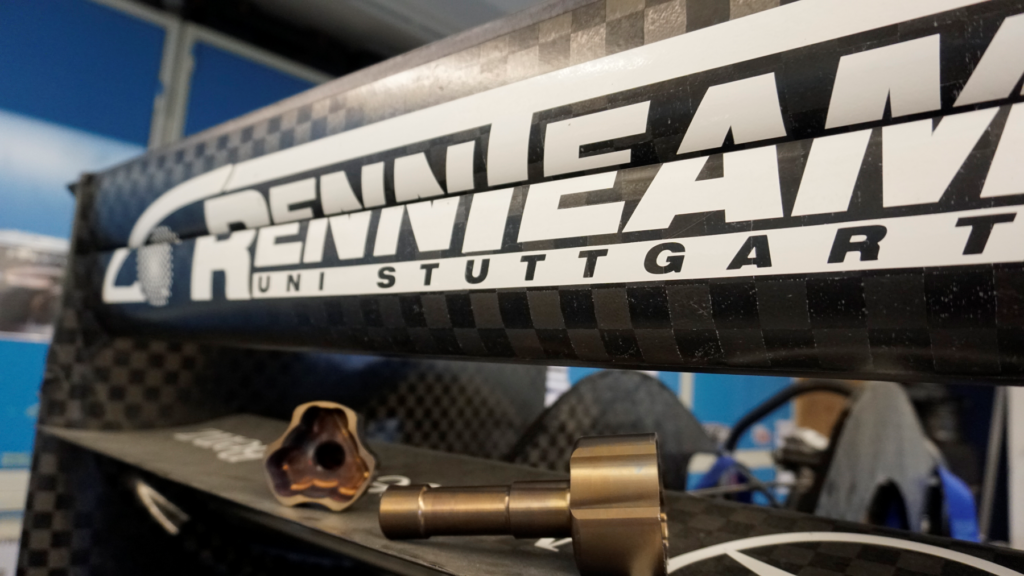
Expanite, the surface hardening specialist, has consulted and advised the students at the RennTeam Uni Stuttgart in identifying and solving some of their challenges with wear on the titanium parts in their racing car. The Rennteam Uni Stuttgart takes part in the Formula Student racing series, a competition for young engineers across Europe, as well as being involved in other international competitions.
The young constructors of the Rennteam Uni Stuttgart are constantly striving to optimize the construction process including the use of materials and spend almost all their time in constructing and testing the cars to prepare for competitions.
To increase the performance including lowering the weight of the race car, the students changed some of the parts to titanium but were faced with problems related to wear parts due to low surface hardness and they decided to contact Expanite for possible solutions.
The Expanite material experts proposed to surface harden the critical titanium parts including parts of the power train, sitting between the differential and the drive shaft with the ExpaniteHard-Ti process. The Expanite hardening makes the use of light-weight titanium parts possible therefore resulting in increased efficiency and significant weight reduction.
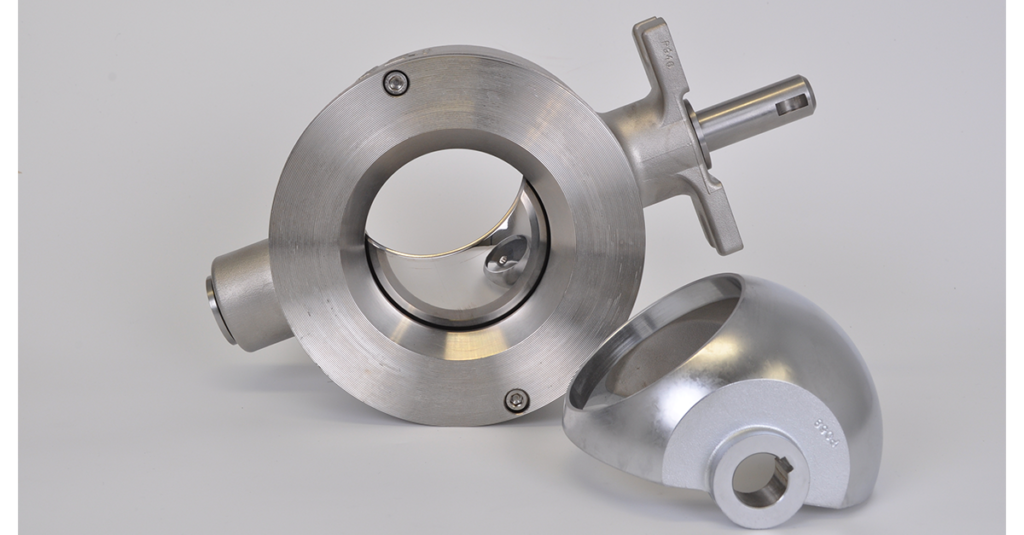
LIAG LÄUFER is a specialist in hygienic shutter valves and pigging systems. The products are designed to meet the highest safety demands in the food industry and must withstand signicant abrasive wear and corrosion aggressive environment.
Their stainless steel cones were originally specied with hard chrome plating. Due to the potential health risks however, hard chrome plating is increasingly prohibited in the food industry. LIAG LÄUFER needed to find an alternative. In their attempt to solve these challenges LIAG LÄUFER tried different surface hardening solutions, which all failed, including a commonly used carburizing process, which caused corrosion after short time in use
Their stainless steel cones were originally specied with hard chrome plating. Due to the potential health risks however, hard chrome plating is increasingly prohibited in the food industry. LIAG LÄUFER needed to find an alternative. In their attempt to solve these challenges LIAG LÄUFER tried different surface hardening solutions, which all failed, including a commonly used carburizing process, which caused corrosion after short time in use
LIAG LÄUFER finally tested Expanite and found a hardening solution that effectively reduces wear and galling, and at the same time improves the corrosion resistance of the parts.
LIAG LÄUFER is determined to offer environmentally sustainable solutions to comply with the industry demand to exclude chrome in the food industry. Expanite hardening solution is a diffusion-based process and therefore significantly more environmentally friendly and sustainable compared to other hardening methods.
The patented Expanite process doesn’t add anything to the material (besides nitrogen and carbon), it just makes the surface harder as much as 10 times harder.
Geschrieben von Mia am . Veröffentlicht in Presse.
(Artikel auf Englisch)
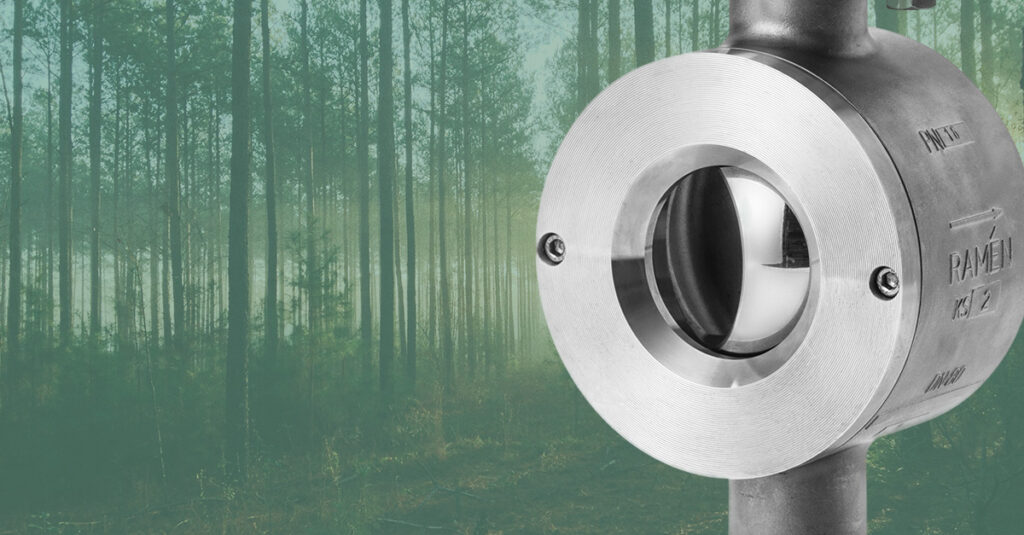
Sweden’s Ramén Valves is a highly respected supplier to equipment manufacturers in industries as varied as food & beverage and mining & minerals. As a successful business of almost 80 years, it is adept at planning ahead to navigate a changing landscape. Part of this is an active sustainability programme to improve environmental performance, keep clear of regulatory risk and remain relevant among customers.
With heightened awareness of the health and environmental dangers of hexavalent chromium and tightening REACH regulations, Ramén Valves knew it would need an alternative to hard chrome plating. But which alternative was best, not only in terms of hardening but also sustainability?
Magnus Alfredsson, strategic purchasing manager at Ramén Valves, led the investigation. He lays out the company’s requirements. “Whatever process we selected it would have to harden at least as well as hard chrome plating, protect people and planet from toxic chemicals, and reduce our use of resources.”
“On wear performance, they showed us a decisive test that demonstrated they could deliver around 300 times less wear than standard vacuum hardening, Magnus Alfredsson – Strategic Purchase Manager, Ramen Valves.”
With these clear objectives, Magnus started to speak with suppliers. “We looked at all the various technologies,” he says. “It wasn’t long before we found a strong candidate.”
Decisive wear performance
“Expanite was very good at answering our questions and providing information,” says Magnus. “On wear performance, they showed us a decisive test that demonstrated they could deliver around 300 times less wear than standard vacuum hardening.”
The Expanite process offered a further practical benefit that Ramén found valuable: its suitability in situations where hard chrome is unusable.
To illustrate the point, Magnus provides an example. “If we choose to make our valves in SST316L to ensure compatibility with the media, then the compatibility is preserved with Expanite. But with hard chrome plating the media interacts not with the base material but with the chrome layer. This can lead to corrosion, making chroming unsuitable.”
No harmful chemicals
Having confirmed the performance and suitability of Expanite’s process on paper, Magnus’ attention turned to sustainability.
“Expanite is one of the ways we can show we are reducing our footprint and differentiating ourselves from competitors. In other Nordic countries bigger companies are starting to ask about this too”, Stephane Blanchet – Sales Manager, Ramen Valves“Of course, reduced wear is a sustainability factor in itself because fewer parts need to be replaced, but we also wanted a safe, low resource process. Hard chrome plating uses harmful chemicals like chromic acid, sulfuric acid, lead, lead chromate and lead oxide. It causes toxic waste. We were happy to discover that Expanite uses no harmful chemicals, only small amounts of nitrogen, ammonia and propene, and produces no toxic waste. It fitted our requirements perfectly.”
Making the switch
With Expanite identified as the best potential replacement for hard chrome, it was time to put it to the test.
“We started out with smaller internal parts, then larger components and applications in really aggressive environments,” says Magnus. “Everything went smoothly, which gave us the confidence to begin the switch out of hard chrome plating. The whole process took almost a year.”
Attracting new customers
The Expanite process is part of Ramén’s strategy for attracting new customers. “In Sweden customers are asking about our environmental impact,” says Ramén’s sales manager Stephane Blanchet. “Expanite is one of the ways we can show we are reducing our footprint and differentiating ourselves from competitors. In other Nordic countries bigger companies are starting to ask about this too.““Looking at the future with all the regulations coming we are ahead of our competitors, and it will be expensive for them to catch up. We are already four years into our partnership with Expanite and expanding our cooperation”.
A safer, healthier future
Ramén’s CEO Per Wennesten has the final word. Although the switch from hard chrome plating to Expanite has strengthened his company, for him it’s more than business, it’s personal.
“Who do you want to be at work?” he asks. “The choices you make at work may have an even bigger impact on the world than the choices you make at home. Both choices are important so be sure to make a choice. We’re proud of our choice and that we’re contributing to a safer, healthier future for everyone.”
About Expanite
Expanite offers state-of-the-art solutions for surface hardening treatment of stainless steels and titanium.
With Expanite’s processes, it is possible to increase the material’s surface hardness tenfold while at the same time maintaining and even increasing its corrosion resistance. Expanite is a global organization with a combined development and production facility near Copenhagen, Denmark, and hardening capacity in both US, Germany, Korea and China. Expanite’s solutions are flexible and can be introduced directly into a customer’s own production line as part of a licensing arrangement. Learn more on www.expanite.com.
Geschrieben von Mia am . Veröffentlicht in Presse.
(Artikel auf Englisch)
The REACH regulation was established by the European Union to better protect health and the environment from the dangers of chemicals. REACH, an acronym for Registration, Evaluation, and Authorization of Chemicals, defines how and under which conditions specific chemicals can be used within the EU.
REACH regulation
Although this regulation came into effect in 2007, it gained more attention in 2013 when Chromium Trioxide (Chromium(VI) oxide) was added to the list of substances requiring authorization because of its carcinogenic and mutagenic properties.
Chromium(VI) oxide stands out from other substances on this list because of its wide range of applications. It is primarily used for surface treatments, whether for enhanced corrosion protection or the production of visually attractive surfaces. As a result, many industries, such as the electroplating industry and mechanical engineering, are feeling the impact of this regulation.
Coating
In general, coating methods that can prevent corrosion tend to add material and are often inconsistent in terms of the thickness of the applied layer. This can result in material accumulations on flat structures or material thinning at corners and edges where protection is reduced. Additionally, coatings may crack and peel off during significant expansion or contraction of the base material due to differences in the thermal expansion coefficient between the base and the coating. Complex contours with undercuts and small openings pose additional challenges, and certain coating methods are not compatible with these surfaces. Expanite takes a different approach to this process that avoids these issues.
The sustainable Expanite® processes:
A solution to the above-mentioned problems involving stainless steels is surface hardening. This is not a coating process but a diffusion-based surface hardening process. Traditional methods for surface hardening corrosion-resistant stainless steels have been available to the industry for some time. However, they mainly have two disadvantages: they reduce corrosion resistance, and the hardness value of steels hardened with nitrogen or carbon often decreases rapidly at the material core. This means that the hardening depth is only a few microns, and the underlying structure is very soft, which can potentially lead to an „eggshell effect.”
Expanite has developed a method that hardens not only the outermost layer, but also hardens the underlying material to a greater depth. In many cases, this also results in improved corrosion resistance.
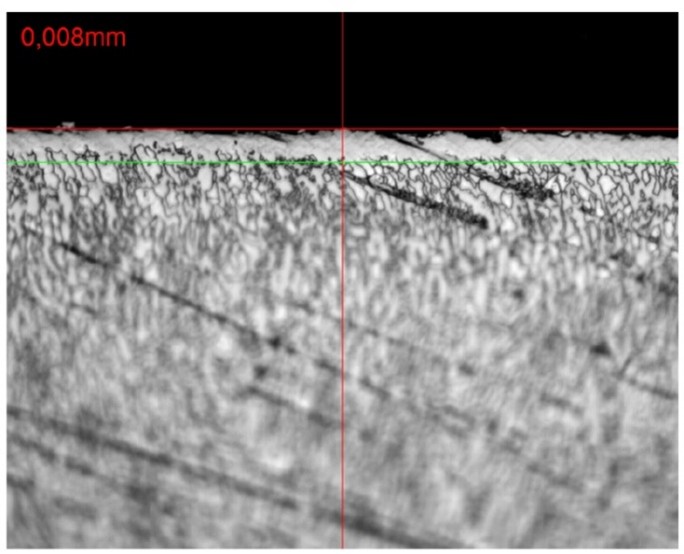
The Expanite treatment for stainless steels involves a two-step process. In the first step (high-temperature process), nitrogen is introduced deep into the surface zone, allowing the material to achieve a hardening up to 1mm in depth ranging from approximately 300 HV (austenitic materials) to 850 HV (martensitic materials). In the second step, the so-called low-temperature process, the workpiece is heated to a maximum of 470°C, and the surface layer is hardened to a depth of 5-30μm, achieving 1100-1300HV (see photo 1), through the embedding of carbon and nitrogen. Combining these two processes prevents the aforementioned „eggshell effect” and offers significant advantages for different kinds of applications.
Photo 1: Expanded Austenite after the Process
Eco-Friendly
Despite its widespread use, hard chrome plating has several disadvantages. Harmful chemicals such as chromic acid, sulfuric acid, lead, lead chromate, and lead oxide are all used in the process. Additionally, it is largely inefficient with at least 70% of the electrical energy being wasted.
SuperExpanite®, the trade name for the layer produced in the Expanite’s two-stage process, stands out for its resource-saving approach. It neither consumes natural re-sources nor produces polluted wastewater. With a low energy consumption of only 1.9 kWh/kg of hardened stainless steel and without the use of harmful chemicals, it offers an environmentally friendly and sustainable alternative to hard chrome plating, which also extends the lifespan of fittings.
Photo 2: Furnaces for surface hardening stainless steel products
Ideal for Abrasive Media Due to Increased Hardness
Hard chrome coatings typically have a hardness of HV 300-1,400, whereas SuperExpanite achieves HV* 1,200±100. The increased hardness of materials treated with SuperExpanite therefore provides better wear resistance, making them perfect for applications involving abrasive materials.
Better Resistance to Galling
Both the SuperExpanite treatment and hard chrome plating produce a strong resistance to galling. However, the inherent cracks in hard chrome coatings can cause the tarnishing of the partner surface, which can lead to galling. By contrast, surfaces hardened with SuperExpanite are crack-free and resist galling.
A Broader Range of Applications Due to Improved Corrosion Resistance
The SuperExpanite treatment does not adversely affect the corrosion resistance of the base material; it can even enhance the corrosion resistance of certain materials, such as stainless steel 316L. Conversely, hard chrome plating produces a layer on the base material that may be incompatible with certain substances due to corrosion. For instance, sulfuric acid and phosphoric acid are not compatible with hard chrome coatings. However, stainless steel 316L or 254SMO, which many valve manufacturers supply as the standard, that is treated with SuperExpanite can be used with these substances depending on the concentration and temperature. This means that the SuperExpanite treatment can be utilized in situations where the use of hard chrome is prohibited or technically impracticable.
Extended Lifespan in Abrasive Applications
The SuperExpanite treatment can be used on components that are not traditionally hard-chromed, such as valve housings. The increased hardness of the SuperExpanite process results in a longer lifespan when valves are used in highly abrasive applications.
Summary
With its technology hardened surface layers, Expanite offers a more environmentally friendly alternative to hard chrome that boasts a lower energy consumption, higher hardness, and better resistance. Expanite also provides a longer lifespan in abrasive applications and a more robust surface treatment without the typical risks of hard chrome plating.
About Expanite
Expanite offers state-of-the-art solutions for surface hardening treatment of stainless steels and titanium.
With Expanite’s processes, it is possible to increase the material’s surface hardness tenfold while at the same time maintaining and even increasing its corrosion resistance. Expanite is a global organization with a combined development and production facility near Copenhagen, Denmark, and hardening capacity in both US, Germany, Korea and China. Expanite’s solutions are flexible and can be introduced directly into a customer’s own production line as part of a licensing arrangement. Learn more on www.expanite.com.
Geschrieben von Mia am . Veröffentlicht in Presse.
Materialoptimierung – Das von Expanite entwickelte Nitrocarburierungsverfahren verbessert sowohl die Härte als auch die Korrosionsbeständigkeit von Edelstahlmaterialien – und das nicht nur für einzelne Legierungen. Daher wird der Prozess auch für medizinische Anwendungen empfohlen. Er verlängert die Lebensdauer der jeweiligen Anwendung, erhöht somit die Patientensicherheit und senkt die Kosten.
Aufgrund seiner einzigartigen Eigenschaften und Vielseitigkeit ist Edelstahl ein wesentliches Material für medizinische Geräte und Implantate, die häufig mit Flüssigkeiten und Gewebe in Kontakt kommen. Die Korrosionsbeständigkeit von Edelstahl gewährleistet eine verlängerte Lebensdauer und verhindert die Bildung von Rost oder anderen Schäden, die die Funktionalität und Sicherheit der medizinischen Produkte beeinträchtigen könnten.
Seit Jahrzehnten wird korrosionsbeständiger Edelstahl in der Medizintechnik umfassend eingesetzt und ist in einer Vielzahl von Legierungsvarianten auf dem Markt erhältlich. Zahlreiche Unternehmen entscheiden sich für diese Materialien aufgrund ihrer Korrosionsbeständigkeit, wobei besonderes Augenmerk auf die austenitischen und Duplex-Varianten gelegt wird. Dennoch sind diese Optionen aufgrund ihrer relativ geringen Härte anfällig für Verschleiß, was häufig zu Problemen wie Kaltverschweißung führt.
Herkömmliche Techniken zur Erhöhung der Verschleiß- oder Kaltverschweißungsbeständigkeit von Edelstahlkomponenten haben einen Nachteil – sie führen oft dazu, dass nichtrostende Stähle nach der Behandlung korrosionsanfällig werden. Beschichtungsverfahren, die dieses Problem verhindern sollen, beinhalten das Auftragen von Material, zeigen jedoch in vielen Fällen Unregelmäßigkeiten in der Schichtdicke. Diese Inkonsistenz führt zur Ansammlung von Material auf flachen Oberflächen, während Ecken und Kanten eine Verringerung der Schutzschicht erfahren. Darüber hinaus können Beschichtungen während erheblicher Ausdehnungen oder Kontraktionen des zugrunde liegenden Materials aufgrund unterschiedlicher Wärmeausdehnungskoeffizienten von Grundmaterial und Beschichtung Risse entwickeln. Kleine Öffnungen stellen weitere Herausforderungen dar, da der Beschichtungsprozess je nach verwendetem Verfahren möglicherweise nicht effektiv angewendet werden kann. Die Umgehung dieser Hürden ist zum Kernziel von Expanite geworden, dem dänischen Anbieter von Oberflächenhärtungstechnologien.
Verbesserung der Leistung von Edelstahl
Die Lösung der oben genannten Probleme mit Edelstählen beinhaltet die Anwendung der Oberflächenhärtung, eines Prozesses, der sich von Beschichtungen unterscheidet und auf diffusionsbasierter Oberflächenhärtung beruht. Während traditionelle Methoden der Oberflächenhärtung für korrosionsbeständige Edelstähle der Industrie seit einiger Zeit zur Verfügung stehen, weisen sie von Natur aus zwei Hauptnachteile auf. Erstens führen alle herkömmlichen Methoden zu einer Verringerung der Korrosionsbeständigkeit. Zweitens erfahren die Härtewerte von Edelstählen, die typischerweise mit Stickstoff oder Kohlenstoff behandelt werden, einen schnellen Abbau, was zu einer geringen Härtungstiefe von nur wenigen Mikrometern führt, und die darunterliegende Struktur ist sehr weich, was potenziell zu einem Eierschalen-Effekt führen könnte. Folglich bleibt die darunterliegende Struktur ziemlich weich, was potenziell zu einem fragilen, schalenartigen Effekt führen kann.
Expanite hat jedoch sein eigenes, FDA-konformes Verfahren entwickelt, das diese Einschränkungen überwindet. In diesem Prozess wird nicht nur die Oberflächenschicht, sondern auch das zugrunde liegende Material tiefgehend gehärtet. Diese speziell entwickelte Nitrocarburierungsmethode ist ein thermochemischer Prozess für Stahl, der die Diffusion von Stickstoff und Kohlenstoff in die Oberfläche des Werkstücks ermöglicht. Dies führt zu erhöhter Oberflächenhärte, verbesserter Verschleißfestigkeit und erhöhter Korrosionsbeständigkeit. Nitrocarburierung kombiniert die Vorteile sowohl der Nitrierung als auch der Karburierung in einem einzigen Prozess.
Prozess schützt Werkstück vor Verschleiß und Korrosion
Die Expanite-Behandlung von Edelstählen umfasst typischerweise einen zweistufigen Prozess. Während der ersten Phase (Hochtemperaturverfahren) wird Stickstoff tief in die Grenzzone eingeführt. Dies führt dazu, dass das Material bis zu etwa 1 mm gehärtet wird, mit Härtewerten von etwa 300 HV für austenitische Materialien bis zu 850 HV für martensitische Materialien.
In der anschließenden Phase, dem sogenannten Niedertemperaturverfahren, wird das Werkstück allmählich auf maximal 470°C erhitzt. Diese kontrollierte Erwärmung ermöglicht die Infusion von sowohl Kohlenstoff als auch Stickstoff, wodurch die Grenzschicht effektiv auf eine Tiefe von 5 bis 30 μm verstärkt wird, wobei Härtewerte zwischen 1100 und 1300 HV erreicht werden. Durch die Kombination beider Prozessschritte wird der fragile Eierschalen-Effekt vermieden.
Um die Verschleißfestigkeit zu testen, führte Expanite Tests an mehreren 316L-Proben durch, die seinem proprietären Härtungsprozess unterzogen wurden, gemäß den Richtlinien des ASTM-Standards G98. In diesem Test wird ein keramischer Prüfkörper unter einer konstanten Presskraft von 25 N auf einer Probe hin- und herbewegt. Nach einer Gleitstrecke von 100 m wird das resultierende Verschleißvolumen bewertet. Bemerkenswerterweise zeigte die mit Super-Expanite behandelte Probe eine 125-fach höhere Verschleißfestigkeit im Vergleich zur unbehandelten Probe.
Während herkömmliche Oberflächenhärtungsverfahren darauf abzielen, die Oberflächenhärte zu erhöhen, gehen sie häufig auf Kosten der Korrosionsbeständigkeit. Genau hier setzt unser Verfahren an: Umfangreiche Tests haben gezeigt, dass Proben, die dem Härtungsprozess von Expanite unterzogen wurden, bis zu 1000 Stunden in einer Salzsprühnebelkammer aushalten können, ohne Anzeichen von Korrosion zu zeigen. Tatsächlich kann die Oberflächenhärtung gelegentlich die Korrosionsbeständigkeit auf ein Niveau erhöhen, das über dem des unbehandelten Basismaterials liegt.
Für weitere Informationen oder zur Kontaktaufnahme besuchen Sie bitte unsere Website: www.expanite.com
Geschrieben von Mia am . Veröffentlicht in Presse.
(Artikel in Englisch)
In den letzten Wochen und Monaten hat Expanite diverse Lösungen im Bereich des Oberflächenhärtens für den Pumpen- und Ventilmarkt entwickelt. Die Hauptprobleme in diesen Industriezweigen waren in der Vergangenheit sowohl Verschleiß, als auch Festfressen von Bauteilen – bei allen Anwendungen, bei denen entweder metallische Dichtung gefordert ist, oder hohe Betriebstemperaturen (jenseits von 300 °C) und/oder korrosive Umgebungen vorliegen, können konventionelle Beschichtungen und die meisten nicht-metallischen Buchsen nicht verwendet werden.
Selbst in Fällen, bei denen spezielle Beschichtungen für den Einsatz in bestimmten Umgebungsmedien geeignet wären, bringen Heiz- und Kühlzyklen ein hohes Risiko für das Abplatzen der Beschichtungen aufgrund unterschiedlicher thermischer Ausdehnungskoeffizienten mit sich. Zahlreiche Kunden, die nach einer technisch fortschrittlicheren Lösung zur Erzielung einer besseren Bauteil-Performance gesucht haben, sind schlussendlich fündig geworden – in dem einzigartigen, diffusionsbasierten Oberflächenhärtungsverfahren von Expanite, das für die meisten kommerziell erhältlichen, korrosionsbeständigen Werkstoffe geeignet ist.
Vor Kurzem hat die Expanite-Technologie einen neuen Maßstab gesetzt für Verschleiß und Festfressen (Kaltverschweißen) bei unterschiedlichsten Werkstoffen wie konventionellen Edelstählen (1.4404/AIS 316, Duplex-1.4462, Nitronic, 1.4980/Alloy A-286), Nickel-Basiswerkstoffen (z.B. Monel® K500, Inconel® 718 und Hastelloy®), sowie Kobalt-basierten Werkstoffen wie Stellite®. Edelstahl-Werkstoffe werden hierbei vielfach in Ventilen für die Lebensmittel- und Pharmaindustrie eingesetzt, wohingegen Monel® und Inconel® zumeist in chemisch aggressiven Umgebungsmedien bei höheren Temperaturen verwendet werden.
Die neue Technologie
Die Oberflächenhärtungs-Technologie von Expanite generiert Oberflächenhärte-Werte im Bereich von 900-1.500HV bei vielfältigen Edelstahl-, Ni- und Co-basierten Werkstoffen, wodurch ein Festfressen von Komponenten effektiv verhindert wird.
Insbesondere bei relativ großen, in der chemischen- und Kraftwerksindustrie eingesetzten Ventilen hat das Festfressen bei Schaltwellen (die das Ventil öffnen und schließen) aus Monel® und Inconel® in der Vergangenheit große Probleme bereitet. Die Anwendung der Expanite-Technologie an diesen Bauteilen führt dazu, dass kein Festfressen mehr auftritt, wodurch die Lebensdauer derartiger Produkte signifikant gesteigert werden kann.
Einzigartige Testergebnisse
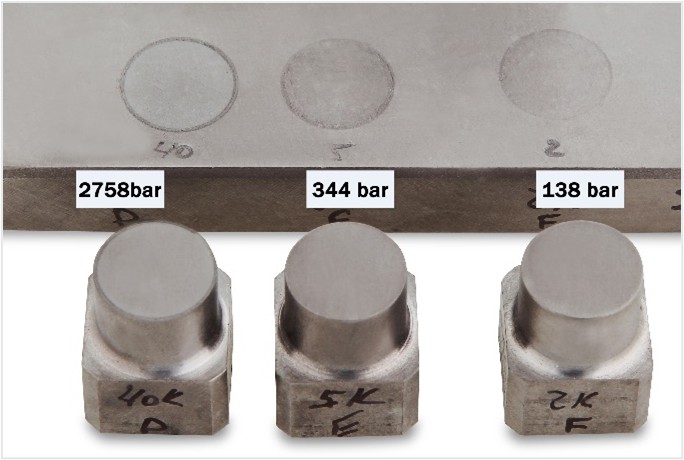
Dies wurde eindrucksvoll anhand eines Versuchsaufbaus zum Widerstand gegen Festfressen (nach ASTM G98) am Beispiel austenitischer Edelstähle (1.4404/AISI 316L) demonstriert, bei dem das Fressverhalten sowohl an ungehärteten, als auch Expanite-gehärteten Proben eruiert wurde (Abb. 1 und 2).
Abb. 1: Untersuchung des Festfress-Verhaltens an un-behandeltem 1.4404 zeigt signifikantes Kaltverschweißen bereits bei relative niedrigen Anpressdrücken
Abb. 2: Untersuchung des Festfress-Verhaltens an Expanite-gehärtetem 1.4404. Keinerlei Kaltverschweißen kann beobachtet werden – nicht einmal bei Anpress-drücken oberhalb der Fließgrenze des Werkstoffs
Abb. 3: Querschliff (Lichtmikroskopische Aufnahme) an einem Expanite-gehärteten Bauteil aus Inconel® 718 zeigt eine homogene Schichtdicke im Bereich von ca. 10µm. Oberflächenhärte-Messungen resultieren in Härtewerten von ca. 1.000 HV0.025
Abb. 4: Querschliff eines Expanite-gehärteten Bauteils aus Stellite 1040. Die Dicke der gehärteten Randzone liegt bei ca. 8µm, bei einer Oberflächenhärte von ca. 900HV0.025
Abb. 5: Querschliff eines Expanite-gehärteten A 286 (1.4980) Werkstoffs. Die Schichtdicke kann gemäß Kundenanforderungen zwischen 10 und 35µm eingestellt werden, bei einer Oberflächenhärte im Bereich von 1.200-1.500 HV0.05
Falls Sie ebenfalls Probleme mit Verschleiß, Festfressen oder Korrosion bei Edelstählen, Ni- oder Co-basierten Werkstoffen haben, zögern Sie nicht mit uns in Kontakt zu treten – die Expanite-Technologie hält vielfältige Lösungsmöglichkeiten für die unterschiedlichsten Anwendungen und Produkte parat.Teilen Sie uns Ihre Herausforderungen mit und finden Sie mit uns die Expanite-Lösung für Ihr Produkt.
About Expanite
Expanite bietet Lösungen für das Oberflächenhärten und für die Wärmebehandlung von Edelstahl und Titan-Werkstoffen gemäß aktuellem Stand der Technik an. Die Expanite-Prozesse ermöglichen eine bis zu zehnfache-Steigerung der Oberflächenhärte bei gleich-zeitigem Erhalt, bzw. sogar Verbesserung der Korrosionsbeständigkeit des Grundwerkstoffs. Expanite verfügt über einen kombinierten Entwicklungs- und Produktionsstandort in der Nähe von Kopenhagen, Dänemark, sowie über Produktionsstandorte in den USA, Deutschland und China. Die Expanite-Lösungen sind flexibel und können an die Anforderungen der Kunden angepasst werden. Des Weiteren bietet Expanite seinen Kunden die einzigartige Möglichkeit, die Expanite-Prozesse in die eigene Produktionslinie als Teil einer Lizenzvereinbarung zu integrieren.
www.expanite.com.