Passa al contenuto principale

Venite a trovarci alla fiera: PackExpo 2026

Data: 18-21 ottobre 2026 - Luogo: Chicago, Illinois, Stati Uniti

Partecipa ai nostri webinar gratuiti sull'indurimento superficiale

Autore: Mia

La tecnologia di indurimento superficiale per l’acciaio inossidabile risolve le sfide di MAN Energy Solutions (articolo in inglese)

MAN Energy Solution’s newest generation of gas driven engines already plays a key role in the sector’s fuel conversion from oil to alternative energy. When developing the engine, Expanite and MAN Energy Solutions collaborated in solving the installation of their gas injection valve in the engine. An important part of the solution came from Expanite – a surface hardening technology that makes stainless steel extremely wear and corrosion resistant. Per Brandt, manager at MAN Energy Solutions, says: “Originally, we had specified a chrome plating in our cylinder cap for mounting our gas injection valve, but it could not always stay tight as there were high requirements for chrome surface quality. We tried unsuccessfully with different solutions. Fortunately, someone had heard about Expanite’s surface hardening, and although stainless steel is usually softer than chrome surface, it turned out to be the solution. A design change coupled with Expanite’s hardening technology solved our challenge. In cooperation with Expanite we relatively quickly found a hardening that made our surface resistant against scratches and corrosion. The solution passed our test in service where the system remained sealed and tight and in addition the solution was also easy and cost efficient to implement.” Expanite is a Danish growth company established in 2010 by three experts in materials and surface hardening from the Technical University of Denmark. In short, the technology is a gas-based treatment of the surface of stainless steel or titanium, so that corrosion resistance is improved, and the hardness is multiplied (eg up to 1200HV 0.05 in stainless steel). This eliminates wear and galling, and the lifespan of the parts is increased by a factor of ten. “Expanite’s processes are significantly more environmentally friendly and sustainable as opposed to chrome baths,” Claus Løndal, European Sales Director in Expanite, emphasizes. “With Expanite, we have the opportunity to change the rules and extend the limits for what qualities you can expect from stainless steel. In addition, our solutions have the advantage that the equipment and processes can be easily implemented directly by our customers.” It is expected to be a huge international market for Expanite, which technology is protected by patents. Expanite has already established service centers in Denmark, Germany, the US and China, and customers are today coming from automotive, medical, food and pumps & valves industry, but the demand for more resistant and durable stainless steel products is wide – also in the marine sector. “We have had a very positive beginning with Expanite, and as the equipment is to deliver more and more and is pushed to the limits, the need for extra hardening of vital components will also increase,” Per Brandt adds
Surface Hardening Technology for Stainless Steel Solves Challenges for Man Energy Solutions
The German MAN Diesel & Turbo has roots dating back to the 18th century and is today the world’s leading supplier of large diesel engines for the marine and stationary plants. The two-stroke engines department is headquartered in Copenhagen, which designs engines and propulsion solutions under the brand MAN B&W. www.mandieselturbo.com

Expanite – Sostituzione del rivestimento in carburo di Expanite – Sostituzione del rivestimento in carburo di tungsteno sull’acciaio inoxinox

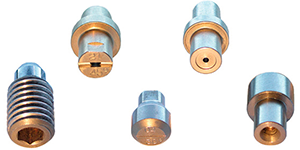
For more than 70 years, coatings, in their various forms, have been “the standard” to improve resistance towards wear, impact, and corrosion for stainless steel components in a great variety of industries, including food & beverage processing, oil & gas, aviation, transportation, industrial, and consumer products. However, in recent years several performance limitations associated with coatings have driven the engineering community, to seek better coating materials, as well as more cost-effective methods to apply them. Among the most promising alternatives is the patented Expanite hardening technology. Recently, one of the world’s leading manufacturers of precision nozzles and nozzle systems has converted from tungsten carbide coatings to Expanite surface hardening after experiencing quality issues with the coating cracking off. In cooperation with Expanite, they found a hardening solution that made the surface of the nozzles resistant against chipping, cracking, delamination, etc.
surface hardening replaces tungsten carbide coating on stainless steel
The specific customer performed field tests over a period of several months where the results from Expanite-hardened nozzles showed significant increased lifetime without any premature failure. Based on the test results, the conversion to Expanite hardening was implemented. Expanite’s customer made the following statements:
  • It is far less expensive to apply Expanite hardening compared than many of the exotic coatings – hence the conversion resulted in better performance while reducing cost.
  • By the conversion from a coating to a diffusion hardening process, issues with adhesion where eliminated, again while getting superior wear and corrosion resistance.
  • Expanite hardening includes short and flexible lead-times, and is an environmentally friendly surface hardening solution.
 

Sostituzione o rinforzo dei rivestimenti DLC (articolo in inglese)


Diamond-like carbon or DLC coatings are today used in many areas where excellent friction properties and good wear resistance are required on component surfaces. The DLC layers applied by complex, time-consuming and costly PVD or PACVD processes are usually only a few micrometres thick. If the part also is required to be corrosion-resistant, making the use of stainless steels mandatory, the DLC system has some weak points. The soft stainless steel as the carrier medium and the correspondingly high hardness gradient to the thin DLC layer promote the eggshell effect this might lead to a defect in the coating, and it will easily start peeling off. Surface hardening of Expanite brings the solution using a gas-based diffusion process to store carbon and nitrogen deep in the component surface. This guarantees a better load-bearing capacity and efficiently counteracts the eggshell effect. If defects occur in the hardness layer while the part is in use, this does not lead to further flaking because, in contrast to the applied DLC layer, the Expanite technology is a diffusion hardness layer that is coherent with the base material. The ExpaniteHard-Ti process provides highly effective protection against wear and scratches. The method is not a coating process, hence all the drawbacks of coatings, including the risks of chipping/spalling off and inconsistencies in layers are completely avoided. In fact, it is the surface of the material itself, which is hardened. The ExpaniteHard-Ti process has a significantly greater level of protection against scratches than that afforded by the hardness of the base material and the hardened parts retains the design colour or as Mr. Pataki describe it: “I tried hard to scratch the pen after the process, but it is practically impossible – I made before and after comparison and the results are spectacular; the pen is now virtually unscratchable” A positive side effect: the gas-based diffusion process is significantly more energy-efficient and environmentally friendly than comparable wear protection processes and, thanks to the treatment in vacuum, no time-consuming cleaning of the parts, e.g., with aggressive chemicals, is necessary after hardening with the Expanite process. “We have already replaced the classic DLC coating in various applications, from the typical running and sealing surfaces in bearings, through pump components or knife edges to applications in medical technology,” explains Dr. Holger Selg, application expert and Expanite Sales Director DACH, and continues: “In some cases, the two technologies were also combined and a DLC layer was applied in addition to our Expanite hardness layer in order to obtain a very resilient system. “ The Expanite technology, specially developed for corrosion-resistant materials, offers a solution for austenitic, martensitic, ferritic and duplex stainless steels as well as for expensive nickel -based alloys such as Inconel and Hastelloy. The new special process ExpaniteHard-Ti, which the Expanite team of experts in Denmark has developed to market maturity in recent years, is used for titanium materials.  

Accelera la crescita con un aumento di capitale multimilionario (articolo in inglese)

The technology of the company is based on a series of patented processes for high performance, gas phase based hardening/heat treatment of stainless steel and titanium with a reduced environmental impact. Expanite offers a fully digitalized approach to surface hardening, production management and quality control, with a business model that involves a chain of its own service centers as well as technology licensees. In addition to being able to deliver services that significantly extend the life of components – offering sustainability in its purest form – Expanite’s way to achieve the extended lifetime of materials is the green alternative to environmentally challenged processes such as hard chrome plating and standard stainless steel hardening involving aggressive chemicals and long process times with associated high energy consumption. Expanite’s patented solutions are gas-based, shortening processing time, reducing the overall energy consumption, and eliminating the need for harsh chemical cleaning before/after processing. The capital increase is primarily lead by the Danish foundation Lauritzen Fonden and the Belgian investment company Finindus, which both have been shareholders in Expanite since In connection with the increase, the ownership has been consolidated, so that Expanite today primarily is owned by these two investors. Especially Lauritzen Fonden has significantly increased its ownership of the company. The CEO of the Lauritzen Foundation Tommy Thomsen states: “Over the past few years, as a minority shareholder in Expanite, we have had the opportunity to follow the development of the company and gained good knowledge of the management, market and business model. So, when the management presented a plan with ambitions to accelerate growth, we judged that it was the right time to increase the foundation’s investment and presence in Expanite. The aim of the Lauritzen Fonden’s business activities is to promote Danish entrepreneurship – and that is exactly what Expanite is a good ambassador for.” Hans Maenhout, Finindus’ Investment Director further underlines: “As an investor into Expanite since 2014 we have not only seen this company grow significantly, but we also witnessed its technology to become even more relevant in today’s world: offering the highest performance, guaranteeing maximum life time, at a minimal environmental impact, and all this in a fully digital package. We look forward to being a part of this next episode for Expanite under a renewed and strengthened ownership structure.” Expanite’s CEO Thomas Abel Sandholdt adds: “We are very proud and humble by the sign of confidence that lies behind the biggest strengthening of Expanite’s capital to date. At times when the clouds over the world economy are darker than seen in a long time, Lauritzen Fonden and Finindus have shown that they believe in Expanite’s potential and support an accelerated growth. With this capital increase, we can realize a very ambitious growth plan that involves geographical and product expansions.”
Multi-Million Euro Capital Increase
 

SuperExpanite® sostituisce la cromatura dura (articolo in inglese)

SuperExpanite® Replaces Hard Chrome Plating
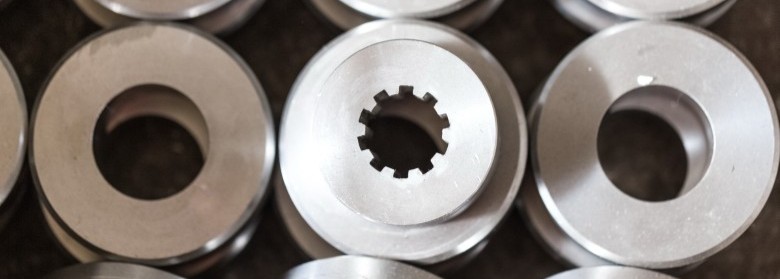
Even where special coatings may be applied in certain environments, heating and cooling LIAG® LÄUFER is a specialist in hygienic shutter valves and pigging systems. The products are designed to meet the highest safety demands in the food industry, and must withstand significant abrasive wear and corrosion aggressive environment. Their stainless steel cones were originally specified with hard chrome plating. Due to the potential health risks however, hard chrome plating is increasingly prohibited in the food industry. LIAG® LÄUFER needed to find an alternative. In their attempt to solve these challenges LIAG® LÄUFER tried different surface hardening solutions, which all failed, including a commonly used carburizing process, which caused corrosion after short time in use. LIAG® LÄUFER finally tested Expanite and found a hardening solution that effectively reduces wear and galling, and at the same time improves corrosion resistance of the parts. LIAG® LÄUFER is determined to offer environmentally sustainable solutions to comply with the industry demand to exclude chrome in the food industry. Expanite hardening solution is a diffusion-based process and therefore significantly more environmentally friendly and sustainable compared to other hardening methods. Lars Meesmann – Project Engineer at LIAG® LÄUFER says: “Our cooperation with Expanite was highly successful. We are very satisfied with the impressive results of the unique Expanite technology which completely meets all our demands and expectations. Expanite´s support, knowledge and experience throughout this project have been first-class”. Mr. Lars Meesmann continues: “The technology is very flexible – and applicable independent of geometry of the product. The superior corrosion properties, lead-time and even a price competitive solution enables LIAG® LÄUFER to supply customers with high end and environmentally safe products”. The patented Expanite process doesn’t add anything to the material (besides nitrogen and carbon), it just makes the surface harder — as much as 10 times harder. Sales Manager Dr. Holger Selg explains: “The process begins with treating stainless steel parts under certain atmospheric conditions, which diffuses nitrogen and carbon atoms into the surface of the part. It passes ASTM tests, and the resulting products meet all FDA regulations and are ISO 9001:2015 compliant. We’re only diffusing nitrogen and carbon into the surface of the workpieces, so it’s called surface hardening”.  

Expanite va nello spazio

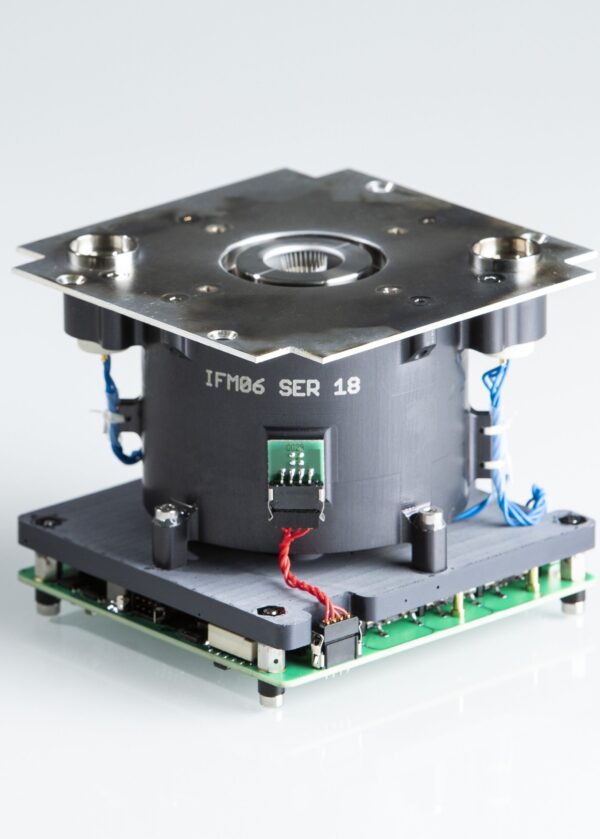
The Enpulsion Field-emission Electric Propulsion (FEEP) technology is an advanced electrostatic propulsion concept of an ion engine that uses liquid metal –indium -as a propellant. A FEEP drive system consists of an emitter and an accelerator electrode. A potential difference in the order ofkV is applied between the two, creating a strong electric field at the top of the metal surface which extracts ions from the apex of the cone and accelerates them to high speeds. The IFM Nano Thruster is used as a compact pre-qualified building block in order to provide customized propulsion solutions for nano-and microsatellites. By clustering the proprietary indium ion emitters, a scaled-up thruster – the IFM Micro Thruster –is created to target the even larger market of small and medium size space crafts.
Expanite Goes to Space
Before Enpulsion started using the Expanite hardening process they were challenged by galling of threads on the housing which caused serious issues in the production line. Enpulsion contacted Expanite to find a better solution. “We contacted Expanite since their anti-galling SuperExpanite treatment seemed convincing in combination with the flexible production lines. We were very excited to work with the highly motivated expert team at Expanite, who supported us throughout our testing of the Expanite hardening process”, says Mr. Roman Hörbe, Supply Chain Manager at Enpulsion. “Our target was to use a treatment that prevents galling and retains corrosion properties of the austenitic stainless steel part, while maintaining the manufacturing tolerances and guarantee good weldability of the final part. Thus, a conventional coating or surface treatment was simply not an option”, says Expanite Area Sales Manager, Dr. Holger Selg. The result already after first test trail proved overwhelmingly convincing on all parameters, and most importantly, the galling phenomenon disappeared completely. “There has been no records of damaged parts ever since”, says Mr. Roman Hörbe, Supply Chain Managerat Enpulsion The company is based in Wiener Neustadt, Austria and has a business development office in Silicon Valley, CA. In its own semi-automated production facility ENPULSION is manufacturing the IFM Thruster family, including the IFM Nano Thruster –the only compact, scalable, and modular electric propulsion system worldwide. With today ENPULSION is producing and delivering nine IFM Nano Thrusters per month to its international B2B customers  

Alternativa alla cromatura dura nell’industria automobilistica

Finding a replacement for hard chrome plating can be challenging, and with EU regulations lowering the limit value for hexavalent chromium, across the industrial markets, need to find alternatives. Hard chrome plating, in various forms, has been one of “the standards” to improve resistance towards wear and corrosion for stainless steel components – and as new solutions are required, Expanite’s hardening technologies has documented its effectiveness within automotive, pumps, valves and food processing equipment markets. Unlike a hard chrome coating, where the electrolyte used during processing may contain hexavalent chromium ions (Cr6+), which are hazardous to human health and is environmentally harmful, the Expanite treatments involves only nitrogen and carbon atoms. This makes Expanite an environmentally friendly and sustainable process. Expanite effectively removes the native oxide film covering stainless steels during the first steps of the gas process without adding any aggressive chemicals, and this allows controlled diffusion of carbon and nitrogen atoms in the underlying steel hereafter.
Hard Chrome Plating Alternative in the Automotive Industry.
“More than 20% of the parts we are processing today with the Expanite process are replacements for hard chrome plating”, says Thomas Abel Sandholdt CEO at Expanite. Whether it’s the valve parts of a fuel injector within automotive, a bushing for marine engines or the rotor for a large pump – they have all experienced the benefits of choosing a diffusion process with no risk of coatings cracking or inhomogeneous hardening zones – and on top comes the compliance with the EU Reach program on reduction of Cr6+ as well as the fundamental decision to move towards more sustainable solutions. Talking about replacing hard chrome with Expanite, Thomas Abel Sandholdt highlights opportunities in the automotive industry with valve components. “Independently of each other, three major suppliers to the automotive industry approached Expanite. They all produce fuel injectors with valve components in ferritic stainless steel which traditionally were hard chromed plated. All three were facing issues such as wear, general quality problems and high cost – and they all found various solutions within the Expanite toolbox. The first of the three projects went into serial production in January 2020, while the two other projects are scheduled to begin serial production in 2021 and 2022,”. “As we are often our customers´ biggest secret, many will not allow us to reveal that we actually have helped them change from hard chrome plating”, Thomas Abel Sandholdt continues. From the first look, Expanite hardening technology might seem costly compared to hard chromium plating, but Thomas Abel Sandholdt is convinced the price difference will equalize, once total life cycle cost and performance is taken into account. The proof lies in the decisions made by so many of Expanite’s customers.  

Expanite - Un’alternativa sostenibile al Teflon®

After the discovery of PTFE (polytetrafluoroethylene) – also known as Teflon® – in 1938, some time passed before technically usable applications for the highly inert material paved their way. Today, coatings based on per- and polyfluoroalkyl substances (PFASs), known by their trade names such as Teflon®, Halar® or Xylan® or more generally referred to by the abbreviations ECTFE, PFA, FEP, ETFE, PVDF etc., are applied in many areas to optimize the sliding and non-stick properties as well as wear and corrosion resistance of components. In addition to the well-known disadvantages of coatings, i.e. inhomogeneous layer thicknesses, layer detachment and increased corrosion attack if the coating is damaged, PFAS-based products have another substantial deficit: the highly stable and therefore not completely degradable carbon-fluorine compounds are harmful not only for humans but also to the environment and can cause cancer, among other things. Accordingly, there has been a trend towards avoiding the use of these materials since the early 2000s, and especially when it comes to improving wear and corrosion resistance, Expanite surface hardening offers a cost-effective and sustainable alternative. The Expanite technology is based on a gas process in which carbon and nitrogen are diffused in the component surface. The otherwise comparable soft and wear-prone stainless steel material hardens by a factor of up to 10 and while classic diffusion processes impacting corrosion resistance of the material, the Expanite processes generally improve the corrosion properties of the component. Besides the elimination of carcinogenic substances, Expanite’s gas-based diffusion process is significantly more energy-efficient and environmentally friendly than comparable wear protection processes, and thanks to the treatment in a vacuum, no time-consuming cleaning of the parts, e.g., with aggressive chemicals, is necessary after hardening.
Sustainable Alternative to Teflon®& Co.
“The different cases in which Expanite is used as an alternative to such plastic coatings are widely spread and can be found, for example, in the areas of pumps and valves, food & beverage or general industrial applications,” explains Dr. Holger Selg, application expert and Expanite Sales Director DACH, and continues: “First and foremost, we increase the wear and galling resistance of stainless steel components. By hardening the surface, the sliding properties are improved at the same time and, depending on the application, offer an adequate replacement for fluoroplastic coatings.” The Expanite technology, specially developed for corrosion-resistant materials, offers a solution for austenitic, martensitic, ferritic, and duplex stainless steels as well as for expensive nickel-based alloys such as Inconel and Hastelloy. Moreover, ExpaniteHard-Ti, which the Expanite team of experts has developed to market maturity in recent years, is used for titanium grades.  

Resistenza migliorata al grippaggio e alla corrosione nei raccordi

A horror for every assembler: galling of stainless steel fittings. A drop of lubricant on the thread helps; but what if, due to for example hygienic requirements, no lubricants may be used, or it is simply forgotten? Stainless steel, with its excellent corrosion resistance, has the disadvantage that when having steel-to-steel contact, it tends to gall. Applying coatings such as DLC or diffusion processes such as Kolsterising®carburizing, nitrocarburizing or plasma nitriding have proven effective in counteracting this effect. However, these processes are not only very costly but also generally have a negative effect on corrosion resistance.
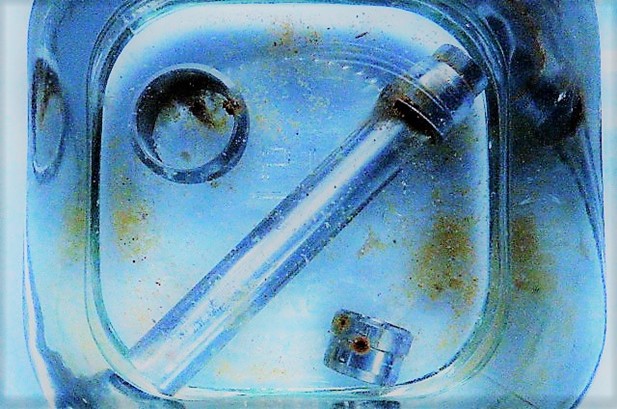
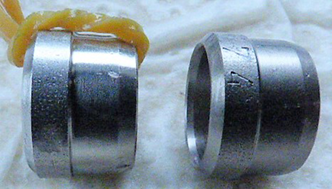
With its processes specially developed for stainless steel, Expanite has overcome this dilemma, using its patented technology to improve corrosion resistance of components during hardening and at the same time make them resistant to wear and galling. In this context, TCW Anlagenbau located in Germany recently carried out extensive long-term corrosion tests on different stainless steel grades. While the traditionally hardened components made of 316Ti (1.4571) (pic 2) show a comparatively strong corrosion attack in the salt bath after a short time, the fittings 316Ti (1.4571) and cutting rings 316Ti (1.4571 & 1.4462) treated with the SuperExpanite show no corrosion even after two months in 10% salt bath solution. In the case of 303 (1.4305), which is basically less resistant, a tendency towards improvement in corrosion resistance could be demonstrated: the unhardened nozzle (pic 4) shows a significantly stronger corrosion attack than the component treated with the Expanite process (pic 5). “Galling of stainless steel components is a well-known problem and we regularly hear from our customers about cases where the galling of a classic screw connection means that entire component have to be replaced at great expense”, explains Dr. Holger Selg, Expanite Sales Director DACH and application expert, and adds: “Ideally, both friction parts are treated with the SuperExpanite, but hardening only one component already provides a significant improvement in terms of galling resistance.” The relatively low hardness of stainless steel also makes corresponding components susceptible to abrasive wear. Here, too, the surface hardening of Expanite provides a remedy and extends the service life compared to unhardened stainless steel components. “Sustainability is playing an increasingly important role,” says Dr. Selg “Expanite also scores points over comparable wear protection processes with a significantly more energy-efficient and environmentally friendly gas-based diffusion process that does not require time-consuming cleaning of the parts, e.g. with aggressive chemicals after hardening.” The Expanite technology, specially developed for corrosion-resistant materials, offers a solution for austenitic, martensitic, ferritic and duplex stainless steels as well as for nickel-based alloys such as Inconel® and Hastelloy®. Moreover, ExpaniteHard-Ti, which the Expanite team of experts has developed to market maturity in recent years, is used for titanium grades.
Pic 1: Components in 316Ti (1.4571) treated with traditional hardening process
Improved Galling and Corrosion Resistance on Fittings
Pic 2: 316Ti (1.4571) fittings without and with Expanite treatment
Pic 3: Cutting rings in Duplex (1.4462) hardend with/without SuperExpanite
Pic 4: 303 (1.4305) nozzle without treatment
Pic 5: SuperExpanite treated nozzle out of 303 (1.4305)
 

Dichiarazione di conformità per materiali metallici a contatto con gli alimenti

Ensuring food safety
The tests was conducted in accordance with the Council of Europe Resolution CM/Res(2013)9, focusing on repeated food contact scenarios – and the possible migration of substances from metallic components into food. In the test, performed for Expanite in October 2023 by an independent laboratory, coupons of stainless steel were treated with Expanite surface hardening (SuperExpanite®) and hereafter exposed to the testing media. Results from the test are expressed in terms of migration levels of various elements into the testing medium, in essence food. Overall aim is to limit migration and stay below the limits expressed in the resolution. The details of the test, were as follows:
  • Material: AISI316/1.4404 stainless steel
  • Expanite treatment: SuperExpanite20 NC
  • Testing medium: 0.5% citric acid
  • Temperature: 70 degrees Celsius
  • Duration: 2 hours
Basically, Expanite-treated components passed the migration criteria for all relevant substances. The tests showed exceptional performance achieved through Expanite’s surface hardening on stainless steel – the treated AISI316 stainless steel exhibited remarkable resistance and compliance with the stringent conditions outlined in the CM/Res(2013)9 test. In the larger perspective, it means that it can be considered safe to apply Expanite surface hardening to on stainless steel for food applications – and thereby combining safety with superior wear resistance. The surface hardening and heat treatment applied by Expanite not only meet but exceed the expectations for materials used in repeated food contact applications. The enhanced properties of the treated stainless steel make it an ideal choice for various industries, including those requiring compliance with strict regulatory standards.